

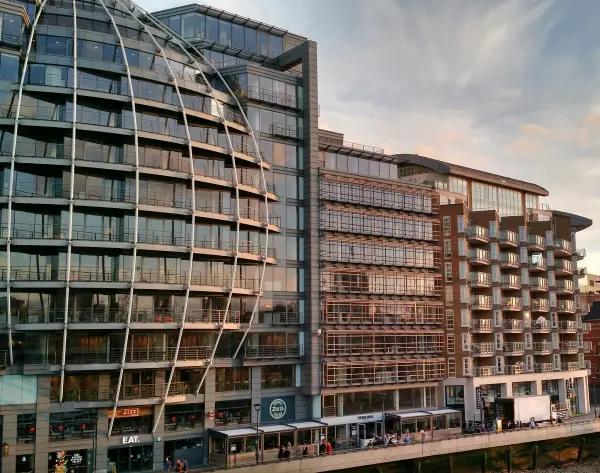
Flat prices across the UK have recorded a decline, mainly driven by a significant slowdown in the property market in London. New housing data suggests buyers are becoming more cautious about purchasing apartments, while other property types continue to rise in value.
UK Flat Market Shows Signs of Pressure
Recent figures from HM Land Registry show that the average price of UK flats dropped by 0.5% in the year to December, settling at approximately £192,826. This contrasts sharply with the wider property market, where average home prices increased by 2.4%, reaching around £270,000.
Property experts say the fall highlights changing buyer priorities following the pandemic, with many purchasers now preferring larger homes offering more living space and outdoor areas.
London Leads the Decline in Apartment Prices
The fall in flat prices has been most noticeable in London, where apartment values dropped by 3.6% over the same period. The decline was even steeper in central parts of the capital, where prices fell by nearly 6%.
Some of the sharpest drops were seen in boroughs such as Kensington and Chelsea, which recorded a 12.4% decline. Other central locations including Westminster, Camden, and Hammersmith also experienced double-digit price reductions.
Housing analysts suggest several factors are contributing to this downturn. Rising service charges, limited living space, and affordability challenges have reduced demand for flats, particularly in high-cost city locations.
Changing Buyer Preferences Since the Pandemic
Research from Knight Frank shows that many homebuyers continue to prioritise larger properties and suburban or regional living arrangements. The growth of remote and hybrid working has reduced the need for buyers to live close to city centres, affecting demand for urban apartments.
Experts also note that higher service charges and ground rents, which averaged around £2,750 per year in London over the past three years, are discouraging some buyers. Property platform Zoopla reports that the increasing number of flats available for sale has also strengthened buyer bargaining power, adding further pressure on prices.
Detached and Family Homes Continue to Grow
While apartment prices have declined, other housing types have shown steady growth. Semi-detached house prices increased by 3.9% to an average of £275,313, while terraced houses rose by 3.6%. Detached homes also recorded growth, rising 1.6% to approximately £440,564.
This trend suggests families and long-term homeowners are continuing to drive demand for larger properties.
Housing Market Remains Stable Despite Economic Pressures
Economists from Pantheon Macroeconomics say the UK housing market has shown resilience despite higher borrowing costs and economic uncertainty during 2025. Experts expect market activity to strengthen if mortgage rates fall and economic growth improves in 2026.
London Property Market Faces Additional Challenges
Data from Office for National Statistics confirms that London was the only UK region to record an overall annual decline in property prices, falling by around 1%. Inner London has experienced its fastest contraction since the global financial crisis of 2009.
Property consultants at Garrington Property Finders say the capital’s housing slowdown reflects several pressures, including affordability concerns, borrowing costs, and a cautious attitude among high-value property buyers.
Regional Markets Show Stronger Growth
Outside London, property markets remain comparatively strong. House prices in Scotland and Wales grew by roughly 5%, outperforming the national average. Northern regions of England also recorded stable price increases, supported by improved affordability and growing local economies.
Rental Growth Begins to Stabilise
Rental prices are also showing signs of slowing growth. London recorded the lowest annual rental increase at 1.1% in January, significantly down from the peak of 11.5% seen in late 2024.
Across the UK, average monthly private rents increased by 3.5% to £1,367 during the year to January 2026. While rents continue to rise, the slower pace may offer some financial relief to tenants following several years of sharp increases.
What the Future Holds for UK Property Buyers
Housing analysts believe the UK property market is entering a period of adjustment rather than decline. Flats in major cities may continue to face short-term challenges, but experts expect demand to recover gradually as mortgage rates ease and affordability improves.
Meanwhile, larger family homes and properties in regional cities are expected to remain attractive to buyers seeking better value, space, and lifestyle flexibility.

