

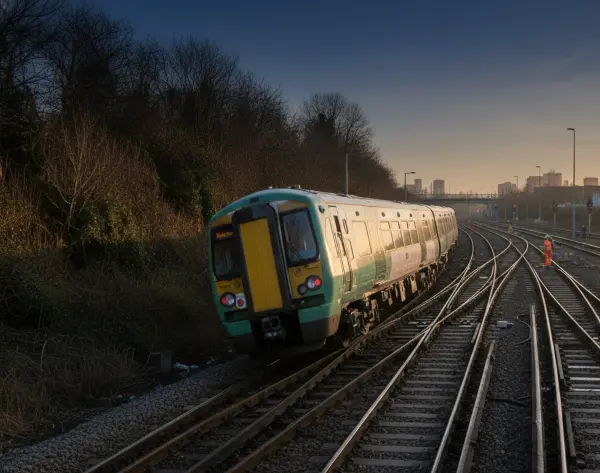
Rail passengers across south-east England faced severe disruption after a train derailment and signalling failures caused widespread delays and cancellations. Although railway operators have now lifted a “do not travel” warning, services across several routes remain affected and travellers are still being advised to check before starting their journey.
Travel Warning Issued After Multiple Rail Incidents
On Wednesday morning, Govia Thameslink Railway (GTR), which runs Southern, Thameslink and Gatwick Express services, urged passengers to avoid travelling during peak hours if possible. The warning was issued around 8am following multiple technical problems across the network.
Rail operators reported that trains could be cancelled, delayed by up to one hour, or run on altered routes. The alert was later lifted at approximately 10am, but service reliability has not fully returned to normal levels.
Train Derailment at Selhurst Depot
One of the main causes of the disruption was a train derailment inside a maintenance depot in Selhurst, south-east London. Images released by Network Rail showed that the train remained upright after leaving the track, and officials confirmed that no injuries were reported.
However, the incident blocked access to the depot, preventing several trains from entering or leaving, which created delays across the wider network.
Rail engineers are working to safely move the derailed train and inspect tracks and equipment to prevent further safety risks.
Signalling Failure Slows Train Movement
Another major issue involved a signalling system failure between London Blackfriars and Norwood Junction. According to National Rail, the fault reduced the number of available tracks, forcing trains to operate at slower speeds to maintain safety standards.
Signalling systems play a vital role in controlling train movements and preventing collisions. When these systems fail, services often slow down significantly or stop completely while repairs are carried out.
Routes Most Affected by Disruption
Several key commuter and long-distance routes experienced suspension or severe delays, including:
-
London Bridge to East Grinstead
-
Orpington to Luton
-
Brighton to Cambridge
-
Bedford to Three Bridges
Additional Thameslink services also faced interruptions, affecting thousands of daily passengers travelling into London and surrounding regions.
Rail Operators Apologise to Passengers
A spokesperson for GTR apologised for the travel chaos and confirmed that repair teams are working with Network Rail to fix both the signalling fault and the derailment issue as quickly as possible.
Passengers have been advised to regularly check official railway websites and social media updates for the latest service information and alternative travel options.
GTR’s Importance to UK Rail Travel
Govia Thameslink Railway is the largest rail franchise in the UK based on passenger numbers. The company operates around 18% of all train journeys nationwide, making disruptions on its network particularly significant for commuters and airport travellers.
The franchise includes major routes connecting London with southern England and provides important transport links to Gatwick Airport.
Rail Nationalisation Plans Continue
The disruption comes as the UK government continues its plan to bring rail services under public ownership. West Midlands Trains recently became the latest operator to be nationalised, and GTR is expected to follow in May.
Supporters of nationalisation believe it could improve service reliability and passenger experience, while critics warn it may increase operational costs.
Additional Rail Problems Across Britain
The disruption in south-east England was not the only rail issue reported on Wednesday. Other technical faults affected services in different parts of the country.
A signalling problem between Crewe and Sandbach forced trains to operate at reduced speeds, affecting services run by Avanti West Coast, CrossCountry, Northern and Transport for Wales.
Meanwhile, South Western Railway services between Portsmouth & Southsea and Portsmouth Harbour also experienced delays due to separate signalling failures.
Advice for Passengers
Transport officials are encouraging passengers to:
-
Check live train updates before travelling
-
Allow extra journey time
-
Consider alternative transport where possible
-
Follow safety announcements at stations
Rail engineers continue working to fully restore services, but some delays are expected to continue throughout the day.
Why Rail Disruptions Can Spread Quickly
Rail networks operate on tightly scheduled timetables. When a train or signalling system fails, delays can quickly spread across multiple routes, affecting thousands of passengers. Maintenance teams often need to carry out detailed safety inspections before services can safely resume.

