

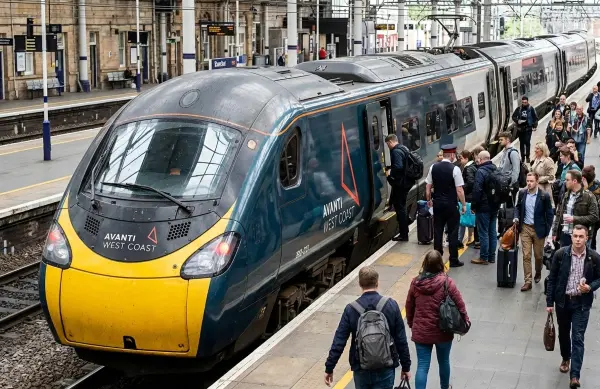
The UK rail regulator has admitted it did not have complete information when it approved a decision that would have turned a busy Manchester-to-London morning train into a so-called “ghost train” with no passengers onboard.
The Office of Rail and Road (ORR) confirmed that key details were missing when it initially allowed the 7:00am peak-time service to run empty, despite being fully staffed and ready for passengers. The decision sparked public anger and political criticism before being reversed within weeks.
What Went Wrong With the Decision
ORR chief executive John Larkinson said the regulator was unaware of several important facts when it made the ruling. These included that the train:
-
Was fully crewed and ready for passenger service
-
Departed from Manchester Piccadilly, not an empty depot
-
Needed to reach London Euston to form a later service to Glasgow
Once these details became clear, the regulator acknowledged that its original reasoning no longer applied.
According to Larkinson, information that came out later proved they had made the wrong assumption.
Why the Train Was Initially Set to Run Empty
The ORR originally approved the empty service so it could act as a “firebreak” in the timetable — a gap designed to reduce delays spreading across the rail network during busy hours.
However, the regulator later accepted that the train could not function as an effective firebreak if it was part of a wider service chain and already staffed.
Public Backlash and Rapid Reversal
The decision, announced in November and due to take effect in mid-December, triggered strong criticism from passengers, rail experts, and MPs. Many questioned why a popular and profitable train would run daily without passengers during the morning rush.
After the backlash, the ORR reversed the decision and allowed passengers to continue using the service.
Regulator Accepts Responsibility
In a letter to Parliament’s Transport Committee, Larkinson admitted that ORR staff did not ask the train operator, Avanti West Coast, for further clarification — something that could have changed the outcome earlier.
At the time, the regulator was dealing with more than 80 complex track-access applications, which contributed to pressure on staff and decision-making delays.
“This was an unusual case, but one we will learn from,” Larkinson said. “I take full responsibility, and we are strengthening our processes.”
Parliamentary Response
Ruth Cadbury, chair of the Transport Committee, said the original decision had confused the public.
“It made little sense to stop passengers using a fully crewed train that was already running,” she said, adding that the committee would work to prevent similar situations in the future.
She also noted that lessons from the incident should inform the creation of Great British Railways, the government’s planned overhaul of the rail system.
Wider Implications for Rail Passengers
The incident has raised broader questions about rail planning transparency and passenger-first decision-making. While the ORR says it generally balances performance and reliability well, the case highlighted how missing information can lead to decisions that undermine public confidence.
Once all facts were reviewed, the regulator said it acted quickly to protect passenger services and maintain the Manchester–London connection.

