

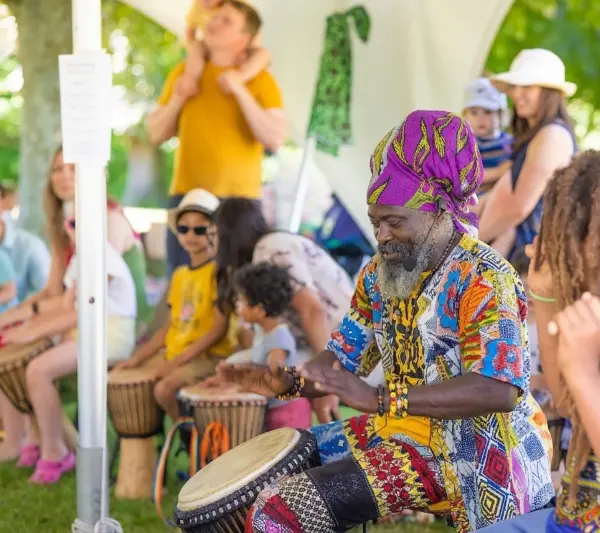
A first-of-its-kind festival celebrating the shared story of migration — both in nature and across human cultures — is coming to WWT London Wetland Centre this May Bank Holiday weekend. Running across three days from Saturday 2 to Monday 4 May 2026, the inaugural Migration Festival brings together live West African music, dance, food, storytelling and hands-on wildlife experiences in one of the most unexpectedly beautiful nature reserves in the capital.
The event is free with standard admission to the centre, making it one of the most accessible and genuinely distinctive Bank Holiday weekend options for London families this spring.
What Is the Migration Festival?
The Migration Festival is built around a genuinely compelling idea: every spring, birds that spent the winter in West Africa make extraordinary journeys of thousands of miles to arrive at London’s wetlands. Sand martins, swifts, common terns, yellow wagtails, chiffchaffs and several warbler species are among the species that travel this route — connecting West Africa and West London through one of nature’s most remarkable phenomena.
The festival explores that connection from both directions. On one side, there are the birds — arriving at the reserve in real time during the festival weekend, with guided walks and expert talks helping visitors understand and appreciate what they are seeing. On the other, there is the living cultural tradition of West Africa — expressed through drumming, dance, storytelling, crafts and food, brought to the wetland through partnerships with three specialist organisations: African Activities, Wuntanara, and Shirley’s.
The result is an event that works equally well as a nature day out, a cultural celebration, and a family activity weekend — with the added resonance of a theme that connects both dimensions in a genuinely meaningful way.
The Birds: What to Look Out For This Weekend
Spring is one of the best times of year to visit WWT London Wetland Centre for wildlife, and the Migration Festival weekend in early May falls right at the peak of the spring arrival season. Several species that have spent the winter months thousands of miles away in West Africa are expected to be present at or around the reserve during the festival:
Sand martins — among the earliest spring migrants to arrive in the UK each year, sand martins are small brown and white birds that nest in sandy banks. WWT London has a purpose-built sand martin nesting bank that has supported over 70 breeding pairs, and a dedicated sand martin hide gives visitors close views of these fast-flying birds during the breeding season.
Swifts — one of the most distinctive summer visitors to London’s skies, swifts arrive from sub-Saharan Africa each spring and spend the entire summer on the wing, feeding, sleeping and even mating in flight. Their screaming calls over the wetlands are one of the iconic sounds of a London spring.
Yellow wagtails — a striking yellow and olive bird that breeds in wetland grasslands and migrates to West Africa for winter. Sightings at London Wetland Centre during spring passage are always a highlight for birdwatchers.
Common terns — elegant seabirds with forked tails that nest at the reserve and migrate between West Africa and the UK. They can often be seen diving for fish over the open water of the main lake.
Chiffchaffs and warblers — several species of small warbler pass through or breed at the reserve in spring, with chiffchaffs typically arriving before most other summer migrants. Their repetitive two-note call is one of the first signs of spring at any London wetland.
Guided migratory bird walks with WWT staff are taking place across the festival weekend, giving visitors expert help in identifying these species and understanding their extraordinary journeys. Stork Talks — informal expert-led sessions about the science and story of migration — are also scheduled throughout the three days.
The Culture Programme: West African Music, Food and Storytelling
Alongside the wildlife, the Migration Festival features a full programme of West African cultural activity delivered in partnership with three specialist organisations.
African Activities is bringing three distinct sessions to the festival:
Djembe Drumming Workshops — hands-on sessions exploring the rhythms and traditions of West African drumming using the djembe, a goblet-shaped drum originating in West Africa that has become one of the most widely played hand drums in the world. The sessions are designed to be inclusive and accessible for all ages and experience levels.
West African Storytelling — interactive storytelling sessions delivered through rhythm, movement and call-and-response techniques. West African oral storytelling traditions are among the richest in the world, passing down history, values and cultural knowledge through performance rather than the written word. These sessions bring that tradition to the wetlands in an accessible and engaging format.
Sustainable Crafts: Bottles into Birds — a creative workshop in which participants transform recycled materials into colourful bird sculptures inspired by the migratory species found at the reserve. This activity connects the conservation ethos of WWT with West African craft traditions and is particularly well-suited for younger visitors.
Wuntanara is delivering high-energy dance and drumming workshops introducing traditional West African dance forms. Wuntanara is a London-based organisation with deep roots in West African performance culture, and their sessions are known for being energetic, joyful and welcoming for participants of all ages.
Shirley’s is running Jollof Rice cooking workshops throughout the festival weekend. Jollof rice is one of the most beloved dishes across West Africa — a one-pot rice dish cooked with tomatoes, peppers and spices, with countless regional variations. Shirley’s specialises in authentic West African food and will be guiding participants through the techniques and flavours behind one of the continent’s most iconic recipes.
Rounding out the programme is Guardian of the Wild — a family puppet show exploring themes of migration, wildlife and nature through storytelling and performance.
About WWT London Wetland Centre
For visitors who have not been before, WWT London Wetland Centre is one of London’s most remarkable hidden assets — a 105-acre wildlife reserve tucked into a loop of the Thames in Barnes, south west London, created from four disused Victorian reservoirs and opened in 2000 as the first urban wetland project of its kind in the United Kingdom.
In 2002, 74 acres of the site were designated a Site of Special Scientific Interest (SSSI) due to the nationally significant numbers of over-wintering shoveler and gadwall ducks that use the reserve each year. Around 180 species of wild birds have been recorded visiting the site, alongside up to eight species of bat, 19 species of dragonfly and damselfly, and over 600 moth and butterfly species.
The reserve attracts approximately 220,000 visitors per year and is run by the Wildfowl and Wetlands Trust (WWT), the UK’s leading wetland conservation charity. All income from admissions goes back into running the centre and supporting WWT’s wider conservation work worldwide.
Facilities on site include a main visitor centre, the Kingfisher Kitchen café, a gift shop, six bird hides, a heated observatory overlooking the main lake, and the Water’s Edge café. The site has level access on main routes and is wheelchair accessible throughout. Carers accompanying visitors with disabilities receive free entry.
Practical Information: How to Get There
Address: Queen Elizabeth Walk, Barnes, London SW13 9WT
Opening times during the Migration Festival:
- Saturday 2 May to Monday 4 May 2026
- Check wwt.org.uk/london for daily opening hours
Getting there by public transport:
- Train: Barnes station (South Western Railway from Waterloo) — approximately 15-minute walk from the centre
- Tube: Hammersmith station (District, Circle and Piccadilly lines) — buses from Hammersmith serve Barnes
- Bus: The 33 and 72 bus routes serve the Barnes area
By car: The centre is located just off the A306. Follow brown tourist signs from Barnes village. Paid on-site parking is available. The centre is outside the Congestion Charging Zone but inside the ULEZ zone.
Tickets: All Migration Festival activities are included with standard general admission to WWT London Wetland Centre. Some sessions are available on a first-come, first-served basis — sign up on arrival at admissions to secure a place. A 10% discount is available when booking tickets online in advance at wwt.org.uk.
WWT members: Entry is free for WWT members. If you visit the centre regularly, membership offers excellent value and directly supports wetland conservation.
Children under 3: Free entry.
Why This Festival Is Worth Your Bank Holiday
The Migration Festival is exactly the kind of event that London does particularly well — taking a genuinely interesting idea and bringing it to life through a combination of nature, culture and community participation in a setting that most people in the city have never visited.
The connection between West African migratory birds and West African cultural heritage is not a contrived marketing hook — it reflects a real and scientifically documented link between two places that are thousands of miles apart but share a seasonal relationship through the natural world. Presenting that connection through music, food, wildlife walks and storytelling gives it a richness and accessibility that a purely nature-focused event or a purely cultural event could not achieve alone.
For families, the programme offers activities across the full age range — from the puppet show and craft workshops for younger children to the drumming and dance sessions and birdwatching walks for older visitors and adults. The wetland setting itself adds a dimension that most Bank Holiday events simply cannot match: the real possibility of seeing and hearing the very birds whose journeys the festival is celebrating.
WWT London is also currently running its popular Gozzle Spring Adventure — an interactive trail for young children based on Julia Donaldson’s picture book about a young gosling’s first migration — which runs alongside the Migration Festival until 31 May. Visiting during the Bank Holiday weekend gives families the chance to experience both the Migration Festival programme and the Gozzle trail on the same visit.
Quick Reference: Migration Festival at WWT London Wetland Centre
| Detail | Information |
|---|---|
| Dates | Saturday 2 – Monday 4 May 2026 |
| Location | WWT London Wetland Centre, Barnes, SW13 9WT |
| Cost | Included with general admission |
| Booking | Some sessions first-come, first-served — sign up on arrival |
| Children under 3 | Free entry |
| WWT members | Free entry |
| Nearest station | Barnes (15-min walk) or Hammersmith (bus) |
| Online discount | 10% off tickets booked in advance at wwt.org.uk |
| Dogs | Not permitted at WWT London Wetland Centre |
| Accessibility | Fully wheelchair accessible, carers free |

