

Energy supplier E.ON has achieved a major milestone: the first power is now being delivered from its new “solar sharing” community energy pilot in East London. The project, hailed as a UK-first, aims to make green energy more affordable and accessible while supporting local communities and national climate goals.
What is the Solar-Sharing Project?
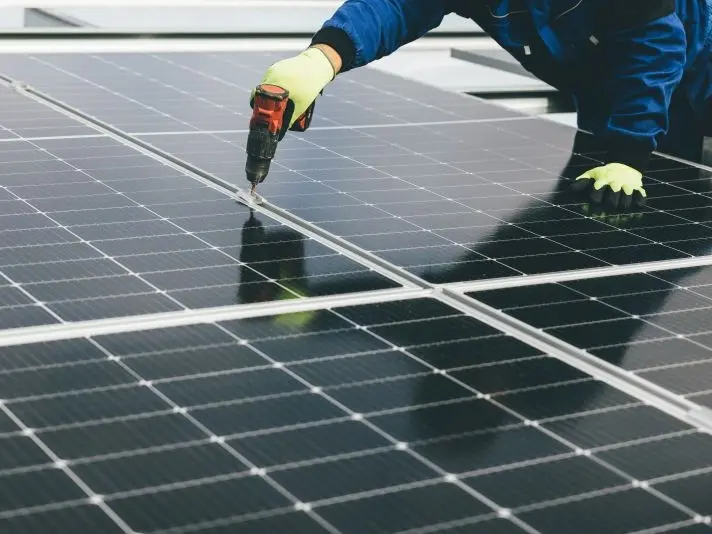
The pilot is centred around St Luke’s CEVA Primary School in Canning Town, East London. E.ON Energy funded and installed over 220 solar panels on the school’s roof. The solar array generates electricity for the school — and any surplus power is shared with local homes at a discounted rate.
Thanks to smart-metering technology, the amount of solar energy produced and consumed is tracked, and households receive credits on their electricity bills for the solar power they use.
This shared-energy model removes the need for physical wiring between the school and nearby homes — making it a scalable and flexible approach to community energy.
Early Results: What the Solar Panels Are Delivering
-
The installation at St Luke’s is expected to generate around 92,000 kWh per year, roughly equivalent to the annual electricity needs of 34 average UK homes.
-
For the school alone, the solar power covers more than half of its energy needs — reducing its reliance on grid electricity.
-
Combined savings for the school and the surrounding community are projected at more than £6,500 per year.
E.ON says this pilot is the first real-world test in the UK of a solar-sharing community model. If successful, it could be a blueprint for many more projects across the country.
Why This Matters: Benefits for Communities, Environment, and Bill Payers
1. Cleaner, Greener Energy for All
By using locally generated solar power, the community reduces its dependence on fossil-fuel-generated electricity — helping lower carbon emissions and support UK net-zero targets.
2. Lower Energy Bills for Households
Participating households benefit from discounted solar-power credits, making energy more affordable — especially valuable during times of rising energy costs.
3. Sustainable Use of Public Buildings
Public buildings like schools often have large unused roof space; solar sharing lets them become clean-energy hubs that benefit their communities. E.ON estimates that rooftops on built structures across the UK could supply vast amounts of low-carbon electricity.
4. A Scalable Model for UK Communities
Because the system doesn’t require physical wiring to each home, it can scale much more easily than traditional private solar installations. This makes it ideal for tightly built communities, and areas where many people rent rather than own their homes.
Challenges Remain: Regulations and Policy Hurdles
While the pilot is promising, E.ON warns that current UK regulations limit the wider rollout of community energy sharing.
-
Distribution and transmission costs — levies traditionally applied to grid-fed electricity — can make solar-sharing less economically viable under existing rules.
-
For solar sharing to expand on a large scale, policy reforms and regulatory support will likely be needed. E.ON has submitted evidence to the UK Parliament’s energy committee highlighting these challenges.
Until such changes are made, community energy projects may struggle to unlock their full potential despite the clear benefits.
What This Could Mean for the Future
If regulations adapt and community-sharing becomes more common, the impact could be significant:
-
Schools, hospitals, libraries — any public buildings — could become solar hubs.
-
Flat-dwellers and renters, long excluded from traditional rooftop solar, could access clean, cheap energy via shared systems. E.ON is already investing in technologies (like rooftop-sharing for flats) to support this.
-
Widespread adoption of solar-sharing could reduce pressure on national energy infrastructure, lower bills, and accelerate the UK’s path to net-zero emissions.
FAQs
1: What exactly is the “solar-sharing community” model by E.ON?
It means a solar panel system is installed on a public building (like a school). The electricity generated powers the building first. Any extra energy is shared with local households. Residents receive credits on their bills instead of requiring new wiring or individual installations.
2: Who can benefit from the solar power in this pilot?
The pilot currently involves St Luke’s CEVA Primary School and nearby homes in the local community. Participating households receive discounted electricity when surplus solar energy is available.
3: Does this reduce carbon emissions?
Yes. Because the electricity comes from solar power, it reduces the need for fossil-fuel generated energy — helping lower carbon emissions and supporting net-zero goals.
4: Why doesn’t every building or home get this option already?
There are regulatory and cost barriers. Distribution and transmission charges associated with shared energy remain high under current UK rules. For the model to expand significantly, policy reform is needed.
5: Could this model work for renters and flats?
Potentially yes. Since the system doesn’t rely on individual rooftop installations, it can be applied at building or community level — making it suitable for flats, rented homes, or dense urban areas.
Final Thoughts
The first power from E.ON Energy’s solar-sharing community project marks a milestone in the UK’s energy transition. By combining innovation, community spirit, and sustainability, the pilot at St Luke’s Primary School shows how clean energy can be shared and made affordable for ordinary homes.
If supported by thoughtful regulation and wider adoption, this model could transform how communities access electricity — turning rooftops, schools, and public buildings into local power hubs that benefit everyone. For anyone interested in cleaner energy and smarter communities, this project offers a hopeful, practical roadmap.

