

The Mayor of London, Sadiq Khan, has announced a major new road safety plan aimed at reducing dangerous driving and ultimately eliminating deaths and serious injuries on the city’s roads by 2041.
The strategy, launched on Friday 13 March 2026, is part of the city’s long-term Vision Zero commitment. The initiative is being delivered in partnership with Transport for London (TfL), the Metropolitan Police Service, and London’s local borough councils.
The new plan outlines a five-year programme of actions designed to make roads safer for pedestrians, cyclists, bus passengers, and drivers across the capital.
Progress Made Since Vision Zero Was Introduced
London first introduced its Vision Zero strategy in 2018 with the goal of removing road deaths and serious injuries from the transport system.
Officials say the programme has already made a noticeable difference. Since 2015, an estimated 262 deaths have been prevented thanks to safety measures introduced by the mayor, TfL, and other partners.
Road casualty data also shows a major decline in serious accidents. In 2024, the number of people killed or seriously injured on London’s roads was 24% lower than the 2010–2014 baseline, representing more than 1,100 fewer victims.
Authorities say this progress means London’s roads are becoming safer faster than many other global cities, including Paris, New York City, Barcelona, and Rome.
Preliminary figures suggest that 2025 recorded one of the lowest road fatality totals in London outside the pandemic years.
Safer Streets for Pedestrians and Cyclists
One key focus of the road safety strategy is protecting vulnerable road users such as pedestrians, cyclists, motorcyclists, and bus passengers.
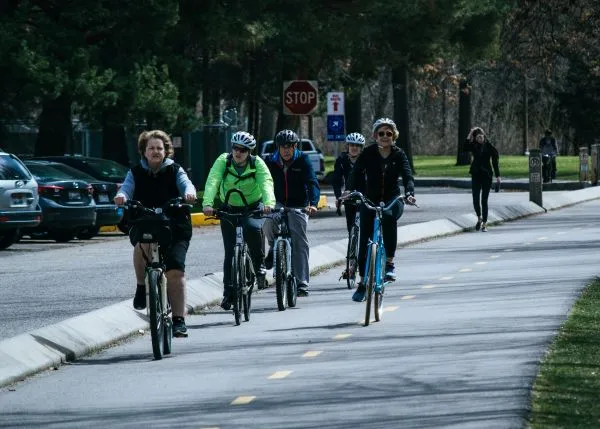
Over the past decade, London has expanded its protected cycling infrastructure significantly. Since 2016, the city’s cycle network has grown to around 430 kilometres, meaning nearly one-third of London residents now live within 400 metres of a safe cycling route.
This expansion has contributed to a sharp increase in cycling. In 2024, cycling journeys in the capital were 39% higher than the 2010–2014 baseline.
At the same time, the risk of cyclists being killed or seriously injured has fallen by about 23%.
Speed Limits and Safer Vehicles
Lower speed limits have also played an important role in improving road safety.
Many boroughs across London have introduced 20 mph speed limits, especially in residential areas and near schools.
Research suggests these lower speed limits have resulted in:
-
34% fewer people being killed or seriously injured
-
50% fewer child casualties
The city has also introduced the Direct Vision Standard, a policy designed to improve safety around heavy goods vehicles (HGVs). Since its introduction, there have been fewer fatal collisions involving large trucks and vulnerable road users.
Key Measures in the New Five-Year Plan
The new safety plan outlines 43 specific actions aimed at reducing road danger across the capital.
Some of the most important measures include:
Safer Speed Limits
At least 65 kilometres of additional safer speed limits will be introduced on major roads managed by Transport for London. Local boroughs will also be supported in expanding 20 mph zones.
More Pedestrian Crossings
Officials plan to install 1,000 new zebra or signal-controlled crossings by 2031, making it easier and safer for people to cross busy roads.
Expansion of Cycle Routes
London’s cycling network will continue to grow. The goal is for 55% of London residents to live within 400 metres of a strategic cycle route by 2035, nearly doubling the current level.
Modern Safety Cameras
Transport authorities will upgrade and expand the city’s safety camera network by adding at least 20 new enforcement locations and introducing smarter technology capable of detecting different driving offences.
AI-Powered Traffic Enforcement
New technology will be tested to detect drivers using mobile phones or not wearing seatbelts. Authorities are also exploring systems that can identify illegal number plates and improve roadside drug testing.
Tackling Large Vehicles
Officials will examine safety concerns linked to larger vehicles such as SUVs, which research suggests can cause more severe injuries during collisions.
Safer Routes for Children
Another important part of the plan focuses on protecting children travelling to school.
Transport officials plan to introduce 200 additional “School Streets” by 2030, bringing the total across London to around 1,000 locations.
School Streets restrict traffic outside schools during busy times of the day, allowing children to walk or cycle safely.
The programme will also be expanded to include secondary schools, not just primary schools.
Bus Safety Improvements
London’s bus network will also be upgraded with advanced safety technology.
By 2031, every bus in the city is expected to be equipped with Intelligent Speed Assist (ISA) systems. These systems automatically help drivers maintain safe speeds by monitoring road limits.
Existing buses will be retrofitted with the technology, while new vehicles will include it from the factory.
Stronger Enforcement Against Dangerous Driving
The safety plan also includes increased enforcement against risky driving behaviours.
Authorities will focus on offences such as:
-
Speeding
-
Driving under the influence of alcohol or drugs
-
Using mobile phones while driving
-
Driving without insurance or a valid licence
A new London-wide Road Danger Reduction team will be created to tackle these issues through targeted enforcement and joint operations between TfL, police, and borough authorities.
Mayor Calls for Continued Action
Mayor Sadiq Khan said the progress already made shows that the Vision Zero strategy is working, but he stressed that more must be done.
He said every road death is preventable and unacceptable, and the new plan is designed to accelerate improvements over the next decade.
Transport leaders also highlighted the importance of cooperation between local authorities, police, and the national government to achieve the long-term goal of eliminating road deaths.
A Long-Term Vision for Safer Cities
Road safety experts say the Vision Zero approach represents a major shift in how cities address traffic accidents.
Instead of treating collisions as unavoidable, the strategy focuses on designing safer streets, safer vehicles, and better enforcement to prevent accidents from happening in the first place.
With continued investment and stronger safety measures, London aims to become one of the world’s safest cities for road travel by 2041.

