

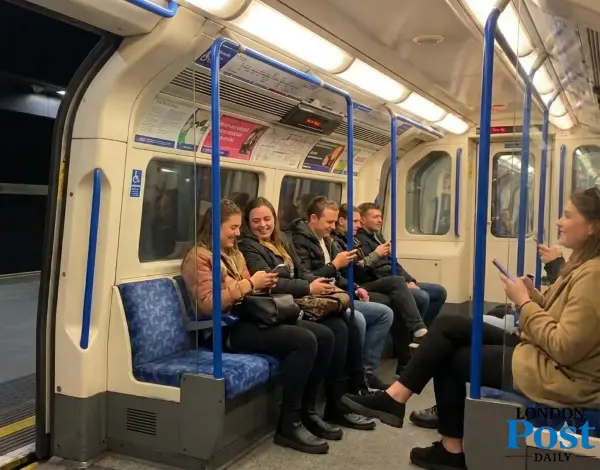
More stations and tunnel sections across London’s Underground network are now connected to high-speed 4G and 5G mobile coverage, marking a major step toward full digital connectivity on the Tube.
Transport for London (TfL) and network provider Boldyn Networks confirmed that mobile coverage has expanded to additional stations and underground tunnels, including the first live sections of the Circle and District lines. The rollout follows the full completion of mobile coverage across the Elizabeth line, which was finished in December 2024.
Over Half of Underground Stations Now Connected
According to TfL, 62 of the 121 Tube stations located fully underground now have mobile coverage in ticket halls, walkways, and platforms. Recently connected stations include Euston Square, Cannon Street, and Battersea Power Station, allowing passengers to make calls, use mobile data, and access online services while underground.
More major stations are expected to go live in the coming months, including King’s Cross St Pancras, Gloucester Road, Warwick Avenue, and Vauxhall.
Tunnel Coverage Expands on Circle and District Lines
Progress is also being made inside Tube tunnels. The first tunnel sections on the Circle and District lines are now live between:
-
Blackfriars and Cannon Street
-
Notting Hill Gate and Bayswater
TfL and Boldyn say work will continue throughout 2026, with the goal of having most of the Northern and Metropolitan line tunnels connected by the end of summer 2026.
All Major UK Mobile Networks Onboard
All four major UK mobile network operators — EE, Vodafone, Three UK, and Virgin Media O2 — are participating in the rollout. This ensures consistent service across different providers and devices.
The upgraded network will also support the Emergency Services Network (ESN), which will give police, fire, and ambulance teams fast access to real-time data and communications during emergencies underground.
Expansion Beyond the Tube Network
The project is not limited to the London Underground. TfL confirmed that high-speed mobile coverage is also being introduced across:
-
The Docklands Light Railway (DLR)
-
The Windrush line (between Highbury & Islington and New Cross)
-
Remaining sections of the Elizabeth line
Design and early testing are already underway, with installation work progressing at stations such as Cutty Sark, where upgrades are being coordinated with planned escalator works to reduce disruption.
Full Network Coverage Targeted by End of 2026
Work will continue throughout 2026, focusing on major lines including the Victoria, Jubilee, Bakerloo, and Piccadilly lines, as well as outer-London tunnel sections that require individual engineering solutions.
TfL and Boldyn remain confident that the entire Tube network will have 4G and 5G mobile coverage by the end of 2026, transforming how millions of passengers stay connected while travelling.
Improving Everyday Travel and Digital Access
TfL says the project is designed to improve the daily travel experience by allowing passengers to:
-
Check live travel updates
-
Contact friends and family
-
Work, browse, or shop online
-
Access news, entertainment, and streaming services
Boldyn Networks, which was awarded a 20-year contract in 2021, currently has around 400 engineers working overnight to install equipment during limited engineering hours. The company is also building a city-wide fibre network to strengthen digital connectivity both above and below ground.
Wider Benefits for London’s Economy
In addition to the Tube, small-cell mobile technology is being installed on TfL infrastructure such as street lighting to improve mobile signals in busy areas. Several key areas such as King’s Cross, Waterloo, London Bridge, Old Street, The Shard area, and Hyde Park Corner are already seeing positive impacts.
City officials say improved connectivity will support businesses, boost productivity, and help London remain one of the world’s leading global cities.

