

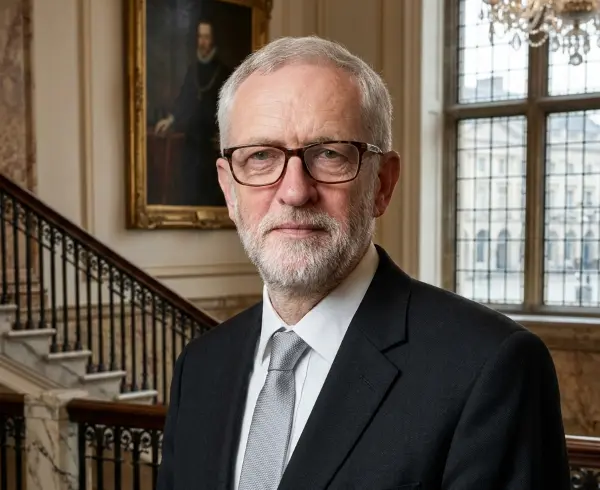
British politics has produced many influential figures over the past several decades, but few have sparked as much debate and discussion as Jeremy Corbyn. Known for his strong socialist views and long parliamentary career, Corbyn has remained a central figure in conversations about inequality, foreign policy, and the future direction of progressive politics in the United Kingdom.
From his financial profile to his political philosophy, here is a closer look at the former opposition leader’s life, career, and continuing influence.
A Long Parliamentary Career and Estimated Net Worth
Jeremy Corbyn served as the Member of Parliament for the constituency of Islington North for more than four decades after first being elected in 1983. His career in public office became the primary source of his income.
Financial estimates place Corbyn’s personal wealth between £1 million and £4 million, although figures vary depending on property valuations and public disclosures.
Most of his earnings came from:
-
Parliamentary salary and allowances
-
Additional income while serving as Leader of the Opposition between 2015 and 2020
-
Property investments in London
During his leadership of the Labour Party, he received extra compensation linked to senior parliamentary responsibilities. Despite this, Corbyn has frequently promoted a modest lifestyle, often highlighting his use of public transport and cycling rather than owning a car.
One of his major financial assets has been a property in London’s Islington area purchased in 2007. Rising property prices in the capital significantly increased its value over time.
Unlike many high-profile politicians worldwide, Corbyn’s wealth remains comparatively moderate, reinforcing the public image he has cultivated as a career public servant rather than a business figure.
Family Background and Ethnicity
Jeremy Corbyn was born on 26 May 1949 in Chippenham, Wiltshire, England. His parents were both English professionals — his mother worked as a mathematics teacher while his father was an electrical engineer.
His upbringing took place largely in traditional English communities during the post-war period. Family involvement in peace activism and social causes strongly influenced his early worldview.
As a young adult, Corbyn volunteered overseas through development programs in Jamaica during the late 1960s. The experience exposed him to global economic inequality and colonial history, shaping many of the international justice positions he later adopted in politics.
Although ethnically English, his political outlook became increasingly international through activism connected to anti-apartheid movements, peace campaigns, and humanitarian causes.
Books and Intellectual Influence
Jeremy Corbyn is not widely known as a traditional author, but he has contributed to political literature through essays, forewords, and collaborations.
One notable example includes his introduction to the republished economic study Imperialism: A Study, where he discussed historical economic conflicts and global power structures. The work generated debate because of controversial historical elements within the original text, although Corbyn stated his focus was on economic analysis and history.
His political rise also inspired extensive commentary from writers and analysts. A widely discussed example is Corbyn: The Strange Rebirth of Radical Politics, written by political commentator Richard Seymour. The book examines how Corbyn’s leadership reshaped modern left-wing activism in Britain and attracted large numbers of young supporters.
During his leadership years, cultural projects such as grassroots campaigns, documentaries, podcasts, and creative media productions also emerged around his political movement, often described as “Corbynism.”
These works reflected growing public engagement with political participation and grassroots organizing.
Political Ideas and Policy Positions
Jeremy Corbyn’s ideology is rooted in democratic socialism. Throughout his career, he has argued for policies aimed at reducing economic inequality and strengthening public services.
Key policy positions associated with him include:
-
Public ownership of railways and utilities
-
Expanded investment in healthcare and education
-
Abolition of university tuition fees
-
Higher taxation on corporations and wealthy individuals
-
Increased workers’ rights protections
As Labour leader between 2015 and 2020, he oversaw a significant increase in party membership, particularly among younger voters and trade union activists.
His foreign policy positions have also been distinctive. Corbyn has consistently supported diplomacy over military intervention and has long advocated nuclear disarmament through peace campaigns.
Supporters view these ideas as principled and humanitarian, while critics argue they sometimes conflicted with traditional national security policies.
A New Political Chapter
After leaving Labour, Corbyn continued serving as an independent MP and remained active in grassroots politics.
In recent years, he announced plans to launch a new political movement alongside fellow MP Zarah Sultana, aiming to focus on issues such as:
-
Child poverty
-
Wealth inequality
-
Corporate accountability
-
Community-led democracy
The initiative signals an attempt to build an alternative platform to represent voters seeking stronger progressive economic policies.
Observers say the move highlights ongoing debates within British politics about representation, economic fairness, and party leadership structures.
Lasting Influence on British Politics
Jeremy Corbyn’s career remains one of the most debated chapters in modern UK political history.
Supporters credit him with reintroducing socialist economic ideas into mainstream political conversation and energising younger generations to participate in politics.
Critics argue electoral challenges during his leadership demonstrated the limits of radical policy proposals in national campaigns.
Regardless of political opinion, his influence on activism, party membership engagement, and public debate about inequality continues to shape discussions about the future direction of progressive politics in Britain.
As new movements and political alliances develop, Corbyn’s legacy is likely to remain an important reference point in understanding how grassroots activism interacts with traditional parliamentary politics.

