

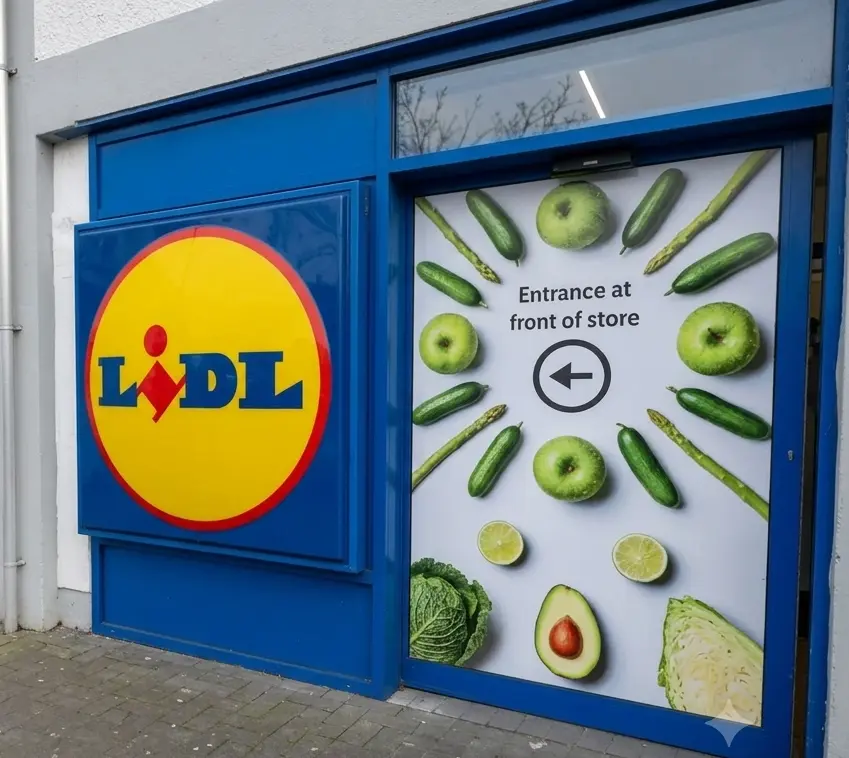
Around 200 Lidl stores now redistributing unsold fresh produce, meat and bakery items daily via volunteer network, with nationwide rollout planned by end of 2026
Lidl shoppers and local residents across London can now collect surplus food for free from selected Lidl stores at the end of each trading day, following an expansion of the supermarket’s partnership with food-sharing app Olio and social impact platform Neighbourly.
The initiative is currently live at around 200 Lidl stores across the UK, including locations in London such as Shepherds Bush, with a full nationwide rollout planned before the end of 2026.
How the Scheme Works
The programme operates through Olio’s existing network of volunteers, known as Food Waste Heroes. When local charities are unable to collect surplus food from Lidl stores during evening hours — as scheduled collections sometimes cannot accommodate late closing times — Olio volunteers step in to pick up remaining stock before the store closes.
Items available through the scheme include chilled fresh produce, meat, fish, poultry, and bakery products that cannot be held overnight due to their short shelf life. Rather than being disposed of, this food is collected by volunteers and redistributed free of charge to neighbours, families, community groups, shelters, and local organisations through the Olio app.
The volunteer model has a clear structure:
- Volunteers collect surplus food entirely free of charge
- They are permitted to keep a maximum of 10 percent of collected items for their own households
- The remaining 90 percent is listed on the Olio app and distributed to local community members who request it
The Scale of Impact So Far
A trial across 20 stores demonstrated the scheme’s potential before the wider rollout. During the trial period, the evening collection programme prevented approximately 1,200 kilograms of food waste per week.
Once fully operational across Lidl’s entire UK store network, the initiative is projected to redistribute 5,000 tonnes of surplus food per year — equivalent to nearly 11.9 million meals annually.
These figures place the programme among the most significant food redistribution initiatives operating through a UK supermarket chain, complementing Lidl’s existing long-running surplus food donation scheme with Neighbourly, through which the retailer has donated 50 million meals to good causes since 2016.
Why This Matters for London
London’s food insecurity challenge is well documented. One in three children in the capital lives in poverty, and demand at food banks and community food distribution points has risen consistently over the past three years. During school holidays, when children lose access to free school meals, that pressure intensifies further.
The Olio model is particularly well suited to London’s dense, community-connected neighbourhoods. Areas like Walthamstow — where volunteer Krys is already operating under the scheme — have active community networks spanning mosques, churches, youth organisations, ambulance services, and YMCA facilities, all of which benefit from redistributed surplus food.
Krys in Walthamstow has demonstrated how a single volunteer can reach multiple different community groups through regular collections, with beneficiaries including women and children’s centres, religious community groups, the YMCA, and Whipps Cross Ambulance service staff.
The scheme also addresses a specific gap in food redistribution infrastructure. Charities operating food banks and community larders typically collect during daytime hours, leaving evening surplus — particularly from bakery and chilled departments — without a reliable collection route. Olio’s volunteer network fills this gap without requiring charities to extend their operating hours or staffing capacity.
Real Community Impact: Examples From the Network
The programme’s impact is most visible through individual volunteer and community stories emerging since the expanded rollout began.
In York, volunteer Tillmann collected approximately 25 kilograms of strawberries, 12 kilograms of bananas, and seven additional crates of food in a single collection — all redistributed to local residents at no cost.
In Harlow, Essex, the Buzzee Beez Pre-school Food Scheme collects from the local Lidl store and redistributes surplus food to more than 50 families connected to the pre-school. Kelly Stallwood, Deputy Manager at the pre-school, described the evening chilled and bakery collections as beneficial to families dealing with new babies, rising living costs, and food budget pressures — and said the community response has been overwhelmingly positive.
The Lidl and Neighbourly Partnership
Lidl’s relationship with Neighbourly predates the Olio expansion. Since 2016, the retailer has operated its Feed it Back scheme through Neighbourly, linking every nationwide Lidl store to local charitable organisations for regular food donations. This programme has facilitated 50 million meal donations over the decade since its launch.
The integration of Olio’s volunteer network into this existing infrastructure represents an evolution of the model — adding an evening collection layer that extends the scheme’s reach beyond what the charity partner network alone can cover.
How to Get Involved
To collect free surplus food:
Download the Olio app (available on iOS and Android), create an account, and search for available listings near your location. Surplus Lidl food will appear as available for collection on evenings when a Food Waste Hero has made a pickup.
To become a Food Waste Hero:
Sign up through the Olio app and register as a volunteer in your area. The app will notify you when collections are needed at your nearest participating Lidl store. No experience is required — the app guides volunteers through the collection and redistribution process.
To find your nearest participating store:
Lidl’s store locator at lidl.co.uk lists current locations. Not all stores are currently participating — the full national rollout is expected to be complete by the end of 2026.
The Bigger Picture: Food Waste in the UK
The UK generates approximately 9.5 million tonnes of food waste annually, according to the Waste and Resources Action Programme (WRAP). Supermarkets account for a relatively small proportion of this total compared to household food waste, but surplus redistribution from retail settings is considered one of the most efficient interventions available — because the food is already prepared, packaged, and safe for consumption at the point of redistribution.
Initiatives like Lidl’s expanded Olio partnership demonstrate that the barrier to redistribution is frequently logistical rather than technical — the food exists and is safe to eat, but connecting it to people who need it requires infrastructure, coordination, and volunteer capacity.

