

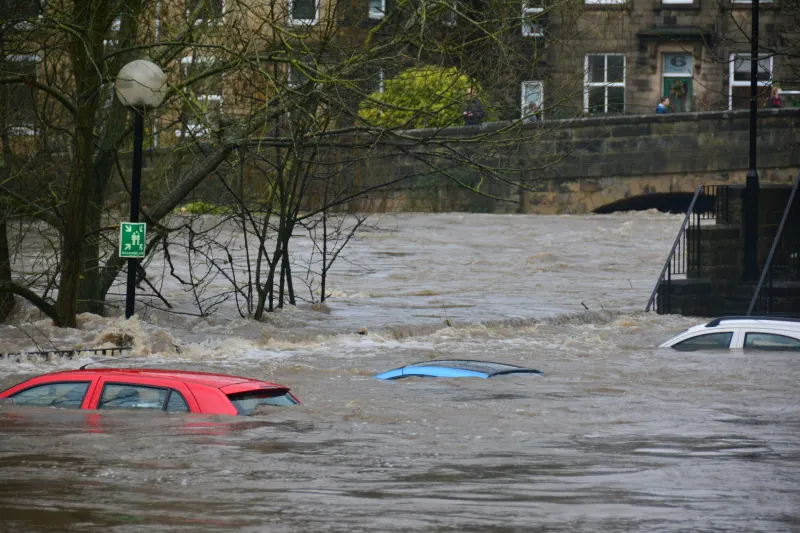
More than 4,000 London charities provide buildings or open space for their services, while 28,970 non-residential properties in the capital face high surface-water flood risk.
Charities across Greater London are being urged to review their risk management and business continuity plans before the worst of the autumn and winter weather arrives, as forecasters indicate a greater chance of wetter and stormier conditions this season.
The warning follows the first named storms of the season. The Met Office has said this year’s El Niño event raises the likelihood of wetter and stormier weather through autumn and early winter.
The Scale of the Exposure
Two figures show how many London organisations could be affected:
- 4,155 charities in Greater London provide buildings, facilities, or open space to deliver their services
- 28,970 non-residential properties in Greater London are identified by the Environment Agency as being at high risk of surface-water flooding
Not every one of those properties is a charity premises, and the two figures should not be read as overlapping. Together, they show that a large number of London community buildings, from church halls and day centres to youth clubs and food banks, sit in a city where surface-water flooding is a recognised and measurable risk.
Why Surface-Water Flooding Matters in London
Surface-water flooding happens when heavy rainfall overwhelms drainage systems and water collects on streets and around buildings, rather than a river overflowing its banks. It is one of the most common forms of flooding in London, where large areas of paved surface limit natural drainage and Victorian-era sewers can struggle to cope with intense downpours.
Because it can strike quickly and away from rivers, many organisations do not realise they are exposed. A building that has never flooded may still be at risk, and the damage can be disruptive even when it is not dramatic: water in a basement, a flooded kitchen, or an electrical system that has to be shut down can close a building for weeks.
Small Problems That Become Long Disruptions
Ansvar Insurance, a specialist insurer for charities and not-for-profit organisations, says that relatively minor issues often turn into extended closures because no plan exists for what to do next.
Common examples include:
- A blocked gutter that leads to water ingress
- A pipe in an empty building that was not checked before freezing weather
- A heating failure in a building used only occasionally
- Storm damage to a roof or windows that goes unnoticed until the next heavy rain
David Eccles, Head of Distribution at Ansvar, said charities understandably focus on the people they support, which can leave risks to their own buildings as an afterthought. He said the charities that cope best are rarely those with the newest buildings, but those that have already decided who makes decisions, who holds the keys, and where services could run from if the building is out of action.
A Five-Step Seasonal Checklist for Trustees
Ansvar has set out practical steps charities can take now:
1. Check the building
Inspect roofs, gutters, drains, windows, and external areas for faults that could worsen in heavy rain or strong winds. Clearing leaves and debris from gutters and drains is a low-cost job that prevents many common problems.
2. Prepare for freezing temperatures
Check pipes, heating systems, and insulation, particularly in buildings that are empty or only used occasionally. Frozen and burst pipes are among the most frequent causes of winter damage.
3. Do not leave empty buildings unchecked
Arrange regular inspections of vacant or rarely used premises, and make sure someone knows how to respond if a problem is found.
4. Review emergency arrangements
Confirm that keyholder and emergency contact details are up to date, and that trustees, staff, and volunteers know who is responsible for taking action.
5. Plan for disruption
Decide in advance where services could be delivered if the building becomes inaccessible, and how staff, volunteers, equipment, and important records would be managed elsewhere.
Mr Eccles summed up the approach by saying that a short checklist completed now can be the difference between a bad afternoon and a bad month.
Additional Steps Worth Considering
Beyond the checklist, charities can strengthen their resilience in several practical ways:
Check your flood risk. The government’s long-term flood risk service on gov.uk lets organisations enter a postcode to see surface-water, river, and other flood risks for a specific location.
Sign up for flood warnings. The Environment Agency offers a free flood warning service for many areas of England.
Review your insurance. Trustees should confirm that cover includes storm, flood, and escape of water, and understand any conditions, such as requirements for regular inspections of empty buildings or for heating to be maintained.
Protect key records. Store important documents, contact lists, and financial records digitally and off-site, so that they remain available if a building cannot be entered.
Agree a fallback venue. Informal arrangements with a neighbouring charity, church, school, or community centre can allow services to continue temporarily. Agreeing this in advance is far easier than negotiating it during an emergency.
Brief volunteers. Volunteers often open and close buildings. Make sure they know who to call and what to do if they find damage.
Why This Matters for the People Charities Serve
When a charity building closes, the effect falls on the people who rely on it. Many London charities provide services such as food banks, advice sessions, older people’s lunch clubs, youth activities, and mental health support. For people with few alternatives, even a short closure can mean missed meals, cancelled support, or isolation.
This is why business continuity planning is not just an administrative exercise. It protects the continuity of services for some of the capital’s most vulnerable residents.

