

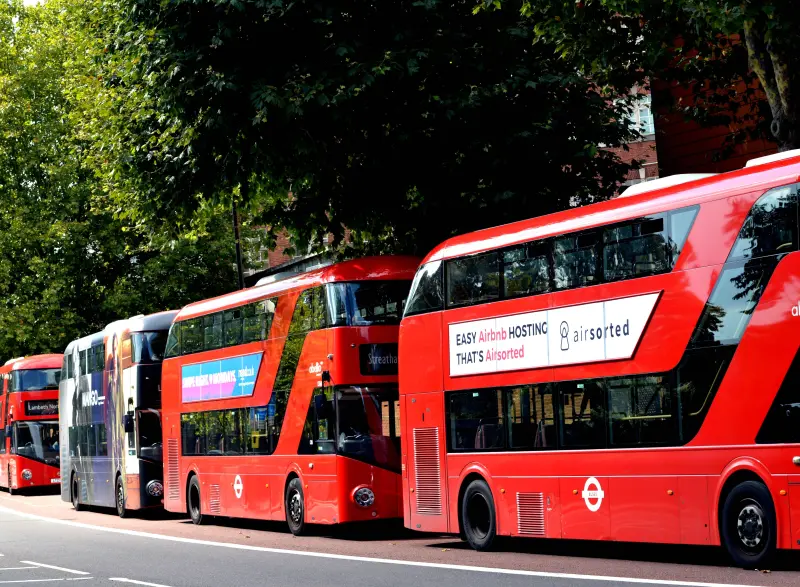
Weekend Hopper saved 6.8 million customers £15 million this summer as the decade-old free transfer scheme marks its anniversary on 12 September 2026
London’s Hopper fare — the scheme that allows bus and tram passengers to make unlimited journeys within 60 minutes for the price of a single £1.75 fare — marks its tenth anniversary this weekend, having facilitated more than 1.43 billion transfer journeys since it launched on 12 September 2016.
The milestone coincides with the conclusion of this summer’s Weekend Hopper promotion, which extended the same unlimited transfer principle to Saturday, Sunday, and Bank Holiday Monday travel across eight weekends — saving passengers a combined £15 million across 6.8 million customers.
What the Hopper Fare Is and How It Works
The Hopper fare operates automatically for anyone paying by contactless bank card or Oyster card on London’s bus and tram network. No separate action is required from passengers — the discount is applied by TfL’s ticketing system when a second or subsequent journey begins within 60 minutes of the first tap.
A single adult bus or tram fare in London currently costs £1.75. Under the Hopper, that single payment covers unlimited bus and tram journeys — across any combination of routes — for the 60 minutes following the first tap. A passenger changing buses three times to reach their destination pays the same as one making a single direct journey.
The fare applies to discounted travel cards as well as standard adult fares, covering:
- Bus and Tram Discount Photocard holders
- Jobcentre Plus Travel Discount card holders
- Care Leavers Oyster Photocard holders
This means the Hopper benefit extends to some of the passengers who most depend on London’s bus network — those on lower incomes, those out of work, and young people leaving the care system — rather than applying only to full-fare passengers.
The Journey From Launch to 1.43 Billion Hops
The original Hopper fare launched in September 2016 in a more limited form — allowing one additional bus or tram journey within 60 minutes of the first tap, rather than unlimited journeys.
The scheme was expanded on 31 January 2018 to cover unlimited journeys within the hour, significantly increasing its practical value for passengers making multi-stage journeys across the network. The change transformed the Hopper from a modest transfer discount into a comprehensive free connection system for the entire bus and tram network within a 60-minute window.
More than 100 million hops were made in the scheme’s first year of operation — a figure that demonstrated immediate uptake and validated the policy decision. Over the subsequent decade the cumulative total has reached 1.43 billion, averaging well over 100 million hops per year throughout the period.
This Summer’s Weekend Hopper
In addition to the standard Hopper fare’s tenth anniversary, Mayor Sadiq Khan introduced a Weekend Hopper this summer — extending the unlimited transfer principle specifically to weekend and Bank Holiday Monday travel.
The Weekend Hopper ran across eight weekends and produced measurable results:
- 6.8 million customers took advantage of the scheme
- Combined passenger savings totalled £15 million across the promotion period
- The scheme applied on Saturdays, Sundays, and Bank Holiday Mondays throughout its run
The Weekend Hopper addressed a specific travel pattern — weekend leisure and social travel tends to involve more interchanges and less direct routing than weekday commuting, making the unlimited transfer model particularly valuable for passengers making multi-leg journeys to events, shopping destinations, family visits, and leisure activities across the city.
Why the Hopper Has Been Significant for London
The Hopper fare’s impact extends beyond the convenience of individual journeys. Several broader effects have been attributed to the scheme over its decade of operation.
Modal shift from cars: TfL has credited the Hopper with encouraging some Londoners to switch from private car use to buses, particularly for journeys that previously seemed less practical or more expensive without free transfers. London’s bus network becomes substantially more useful when passengers can connect between routes without paying an additional fare for each leg.
Support for lower-income Londoners: Bus travel in London is disproportionately used by lower-income residents compared to Tube travel, which tends to have a more mixed income profile. A fare policy that makes multi-bus journeys cost the same as single-bus journeys has therefore delivered proportionally greater benefit to households managing tighter transport budgets.
Air quality and congestion: Every car journey replaced by a bus journey reduces vehicle emissions and contributes incrementally to reduced congestion. The Hopper’s role in making bus travel more competitive with car use aligns with the Mayor’s wider air quality and transport strategy.
Family travel: Passengers travelling with pushchairs and young children often find bus travel involves multiple stops and changes. The Hopper eliminates the cost penalty for these multi-leg journeys, making bus travel a more realistic option for families navigating the network with young children.
The Fare Freeze Context
The Hopper anniversary coincides with Mayor Khan’s record on bus and tram fare levels more broadly. The Mayor has delivered seven freezes of bus and tram fares during his time in office, with the current freeze extended beyond its original end date in response to ongoing cost-of-living pressures.
The current adult single bus and tram fare of £1.75 represents strong value in the context of public transport pricing across comparable global cities. London’s bus fare is capped regardless of journey length — a passenger travelling two stops pays the same as one travelling 20 stops on the same route — and the Hopper extends this simplicity to multi-route journeys within the hour window.
Lorna Murphy, Director of Buses at TfL, said the Hopper has been helping bus and tram customers save money for a decade, and described travelling on buses and trams in London as representing strong value for money at the £1.75 single fare level.
What the Hopper Has Meant for London’s Bus Network
London’s bus network is one of the largest and most comprehensive urban bus systems in the world, operating more than 700 routes and covering every part of the capital. The network’s design means that many journeys — particularly cross-borough and orbital trips that do not follow radial routes into central London — require one or more changes between routes.
Before the Hopper, each change added £1.50 or more to the cost of the journey (reflecting the fare level at the time of launch). The Hopper eliminated this cost entirely for connections made within 60 minutes, effectively making the bus network function more like a single interconnected system from a cost perspective.
Karim Fatehi OBE, Chief Executive of the London Chamber of Commerce and Industry, connected the Hopper’s impact to London’s economic competitiveness, saying public transport plays a critical role in connecting people to jobs, supporting businesses, driving investment, and maintaining London’s attractiveness as a global destination. He described the Hopper’s contribution to making travel more affordable and accessible over the past decade as a positive development for the capital’s transport infrastructure.

