

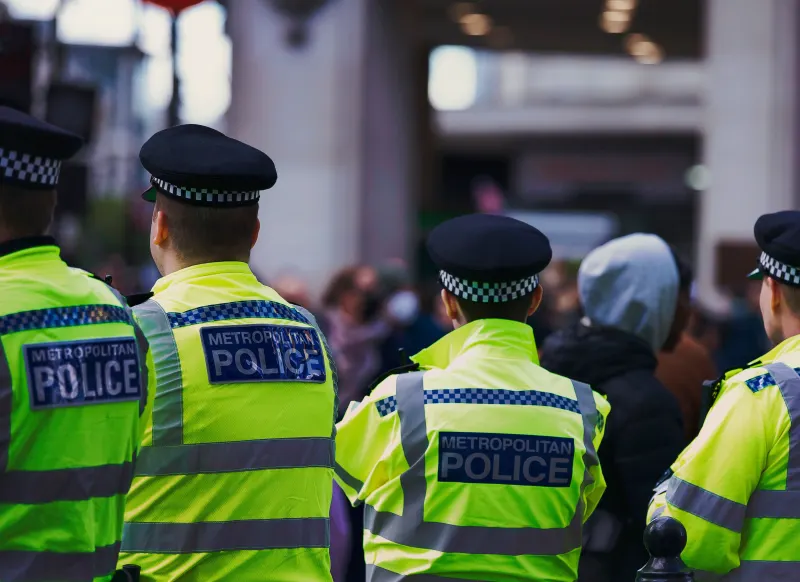
The new partnership with British Transport Police stopped 467 people in its first month, but London’s latest figures raise a bigger question: is increased enforcement actually reducing fare evasion?
Transport for London has reported 24 arrests during the first month of a new operation targeting persistent fare evaders across London’s transport network.
Known as Operation Vector, the initiative brings together plain-clothes officers from the British Transport Police (BTP), TfL revenue inspectors and uniformed enforcement staff. It began in October 2026, with the first results announced on 3 November.
During its first month, the operation stopped 467 people, issued 156 penalty fares and generated 175 reports for possible prosecution. BTP officers also made 24 arrests for offences including fare evasion and wider criminal activity.
The figures give an early indication of how the operation is working. But they do not yet show whether it is reducing fare evasion across London.
That is a more significant test for TfL, which wants to bring the overall rate down to 1.5% or lower by 2030/31.
How Operation Vector works
Operation Vector is designed to catch people who repeatedly travel without paying the correct fare, particularly those who push through ticket barriers behind other passengers.
Unlike conventional ticket checks, the operation uses plain-clothes police officers positioned beyond station ticket barriers. They work alongside TfL’s Revenue Control teams and uniformed Transport Support Enforcement staff, using coordinated communications to identify and intercept suspected offenders.
The approach is intended to make it harder for repeat offenders to predict where enforcement officers will be working.
TfL says the operation will also help police identify links between fare evasion and other criminal activity.
BTP Chief Inspector Daniel Rushall said the operation had already provided opportunities to identify and apprehend people involved in more serious offences. Officers seized weapons and drugs during the first month.
This wider policing element is important. The 24 arrests were not all necessarily for fare evasion, and the operation is intended to address criminal activity beyond unpaid travel.
What the first-month figures actually tell us
TfL’s announcement provides four headline figures:
| Enforcement activity | First-month result |
|---|---|
| People stopped | 467 |
| Penalty fares issued | 156 |
| Reports for possible prosecution | 175 |
| Arrests by BTP | 24 |
These figures show that the operation has generated enforcement activity, but they need to be interpreted carefully.
A penalty fare is not the same as a criminal conviction. A report for possible prosecution is a case referred for further consideration, not proof that someone has been prosecuted or found guilty.
Similarly, the 24 arrests include wider offences, so it would be misleading to describe all of them as fare-evasion arrests.
The figures also do not establish how many repeat offenders were identified, how many cases resulted in successful prosecutions or how much additional fare revenue was recovered.
Those details would help establish whether Operation Vector is making a lasting difference rather than simply increasing the number of people stopped.
London’s fare-evasion problem in numbers
The wider figures show why TfL is putting more resources into enforcement.
According to TfL, the overall fare-evasion rate across its transport network was 3.9% in 2022/23. It fell to 3.8% in 2023/24 and 3.5% in 2024/25.
It remained at 3.5% in 2025/26.
However, the latest available quarterly figures offer a slightly different picture. TfL recorded an overall rate of 3.3% in the first quarter of 2026/27.
The distinction matters because the annual rate and the latest quarterly figure measure different reporting periods. The quarterly result is encouraging, but it is too early to conclude that the improvement will continue throughout the financial year.
There is also a difference between the overall TfL network and the Underground itself.
In 2025/26, the fare-evasion rate was:
- London Underground: 5.0%
- Buses: 2.6%
- London Overground: 3.3%
- DLR: 4.0%
- Elizabeth line: 3.3%
- Trams: 7.3%
The figures show that fare evasion varies considerably between transport services. The Underground rate is higher than the overall network average, while the tram network recorded the highest rate among the listed modes.
TfL says fare evasion currently costs the organisation approximately £190 million a year in lost revenue.
That is money which could otherwise contribute towards operating and maintaining London’s transport network.
Sources: TfL’s fare-evasion statistics and its September 2026 Freedom of Information response.
More enforcement, but is the problem getting smaller?
TfL has increased its enforcement activity over the past year.
Its figures for the 2025/26 financial year show that revenue enforcement teams:
- Issued 69,001 penalty fares, a 9% increase on the previous year.
- Submitted 21,533 irregularity reports for possible prosecution, up 18.7%.
- Checked 6.9 million contactless payment cards, an increase of 50.6%.
- Secured 14,406 convictions for fare evasion, 955 more than in 2024/25.
These numbers come from TfL’s June 2026 enforcement announcement.
They demonstrate that more passengers are being checked and more enforcement cases are being pursued. However, the overall fare-evasion rate remained at 3.5% between 2024/25 and 2025/26.
That does not necessarily mean the enforcement programme has failed. Increased checks can identify more offenders without immediately changing the overall proportion of journeys affected by fare evasion.
It does, however, show why the number of penalty fares and arrests should not be the only measures of success.
The longer-term question is whether more enforcement leads to fewer unpaid journeys and less revenue being lost.
TfL’s target: reduce fare evasion to 1.5% by 2030/31
TfL launched its wider fare-evasion strategy in April 2025, setting a target of reducing the overall rate to 1.5% or lower by the 2030/31 financial year.
Reaching that target will require a substantial improvement.
The rate stood at 3.5% in 2025/26, meaning TfL needs to reduce it by another two percentage points to reach its ambition.
Its approach includes more ticket inspections, additional enforcement officers, investigations into repeat offenders and greater use of travel and payment data.
One of the tools used by TfL’s investigation teams is the Irregular Travel Analysis Platform (ITAP). It analyses ticketing and journey information alongside other evidence, including CCTV, to help identify people suspected of repeatedly avoiding fares.
Operation Vector adds a more direct policing element to that strategy.
The London Assembly has also published figures showing how fare evasion differs across London’s transport services. Its July 2026 response makes clear that TfL does not currently produce comparable borough-level estimates, because the overall figures are calculated using network-wide data.
That is worth remembering when interpreting claims about which parts of London have the biggest fare-evasion problem.
What does fare evasion mean for ordinary passengers?
Fare revenue is an important part of funding London’s transport network. TfL argues that unpaid journeys reduce the money available to support services, maintenance and improvements.
There is also a staff-safety issue.
Siwan Hayward, TfL’s Director of Security, Policing and Enforcement, has said that fare evasion and people forcing their way through barriers can create an intimidating environment for employees and paying passengers.
For commuters, the operation is unlikely to change the way they travel if they already pay the correct fare. However, passengers may notice more enforcement officers at stations and increased ticket checks.
Anyone travelling on the network should make sure they use the correct ticket or payment method, touch in and out where required, and follow the conditions attached to their ticket.
TfL publishes information about its enforcement approach and passenger responsibilities on its official fare-evasion website.
What happens next?
Operation Vector has delivered its first set of results, but one month is not enough to establish whether it will reduce fare evasion across London.
The next set of figures should provide a clearer picture of its effectiveness. In particular, the number of repeat offenders identified, prosecution outcomes and changes in the overall fare-evasion rate will be more useful measures than arrests alone.
TfL has a clear target for 2030/31, but the latest annual figures show that progress has not yet reached the pace needed to make that ambition certain.
For now, Operation Vector represents another attempt to tackle a problem that costs the transport network millions of pounds every year.
The real test will not be how many people officers stop in their first month. It will be whether fewer people travel without paying in the months and years ahead.
This article will be updated when TfL publishes further Operation Vector results and new fare-evasion statistics.
Sources and further information
- Transport for London – Operation Vector: first-month results, 3 November 2026
- TfL – Tackling fare evasion: rates and enforcement outcomes
- TfL – Enforcement results for 2025/26, 10 June 2026
- London Assembly – Fare-evasion figures, July 2026
- TfL – Fare revenue loss, Freedom of Information response, 17 September 2026

