

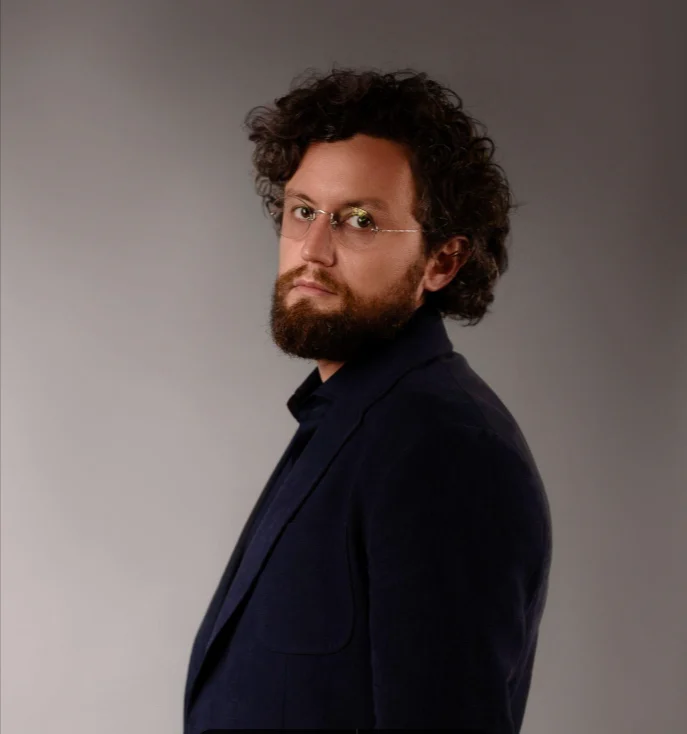
The angel investor and Arrow Stars founder has written about the risks facing early-stage companies, including weak business models, funding problems and decisions made too late.
Starting a business can attract investors, customers and attention. Keeping it alive is a different challenge. A company may have a promising product and an experienced team, but still struggle to turn its idea into a sustainable business.
This issue is central to the published work of Dmitrii Khasanov, an angel investor, digital marketing expert and founder of Arrow Stars. In a June 2026 article for Forbes Business Council, he examined how investors can respond when a startup begins to fail.
His article focused on a practical problem: investors need to recognise when a company is struggling and understand why before deciding whether further funding makes sense.
Why startup investments can go wrong
In his Forbes Business Council article, Khasanov identified several reasons why startups struggle. These included a lack of market demand, poor business models, financial problems, weak management teams and mistakes in pricing or timing.
He also discussed the importance of recognising problems early. Falling sales, limited customer growth and concerns raised by business partners can all point to difficulties that investors should investigate.
The central issue is not always a shortage of money. A company may receive investment and continue operating for some time without finding enough customers or developing a reliable way to generate revenue.
For investors, this creates a difficult decision. Providing more funding may give a business time to recover, but it can also increase losses if the underlying problem remains unresolved.
Khasanov’s article recommends reviewing the reasons behind the company’s difficulties, assessing which problems can be addressed and considering whether a change in strategy is realistic.
The UK startup market continues to attract investment
The discussion comes as the UK remains an important market for venture-capital investment.
A government evidence pack produced by the Department for Science, Innovation and Technology and the Council for Science and Technology, using Dealroom data, found that UK startups raised $23.7 billion in venture capital during 2025.
That was a 33% increase from the $17.9 billion raised in 2024. The report also found that London accounted for around 75% of UK startup venture-capital investment in 2025.
However, the figures show that access to investment is not evenly distributed. The same report found that overseas investors provided 74% of UK venture-capital investment by deal value during 2025.
This matters because raising money is only one part of building a company. Founders must also decide how to use that funding, manage costs and develop products that customers are willing to pay for.
What investors need to examine beyond funding
Khasanov’s published commentary raises questions that apply to businesses at different stages of development.
A large funding round can attract attention, but it does not automatically prove that a company has found a sustainable market. Investors still need to examine how a business earns revenue and whether customers continue using its products.
Customer demand is particularly important for early-stage companies. Initial interest may produce sign-ups or trial users, but those numbers do not always translate into paying customers.
Investors also need to understand the company’s financial position. Regular reviews of spending, available cash and future funding requirements can help identify problems before they become more difficult to manage.
The management team matters too. A company facing pressure needs people who can assess difficult decisions, respond to customer feedback and make changes when the original plan is not working.
These are not guarantees of success. They are practical areas that investors can examine before committing additional capital.
The importance of knowing when to change direction
A struggling startup does not always need to close. Some businesses can recover by changing their product, adjusting prices, reducing costs or targeting a different group of customers.
But not every company has a realistic route back to growth.
In his Forbes Business Council contribution, Khasanov argued that investors should examine the reasons for failure rather than react emotionally to a difficult period. He also highlighted the value of reviewing investment decisions and improving due diligence for future opportunities.
His article reflects a wider challenge in startup investment: knowing the difference between a temporary setback and a business model that is not working.
For founders, the same questions apply. They need to understand what customers value, where revenue comes from and whether the company can support its costs over time.
The UK startup market continues to attract substantial investment, particularly in London. But funding alone cannot determine which businesses will survive. The companies that can respond to customer needs, manage their finances and make difficult decisions will have a stronger basis for building lasting operations.
Editorial note: Khasanov’s views in this article are drawn from his published Forbes Business Council contribution, rather than a direct interview with London Post Daily. Forbes identifies the piece as a Council Post and states that the council operates on a fee-based membership model.

