

Transreport’s digital coordination platform — used across 12 million assistance requests on UK and Japanese rail networks — enters urban metro environment for the first time
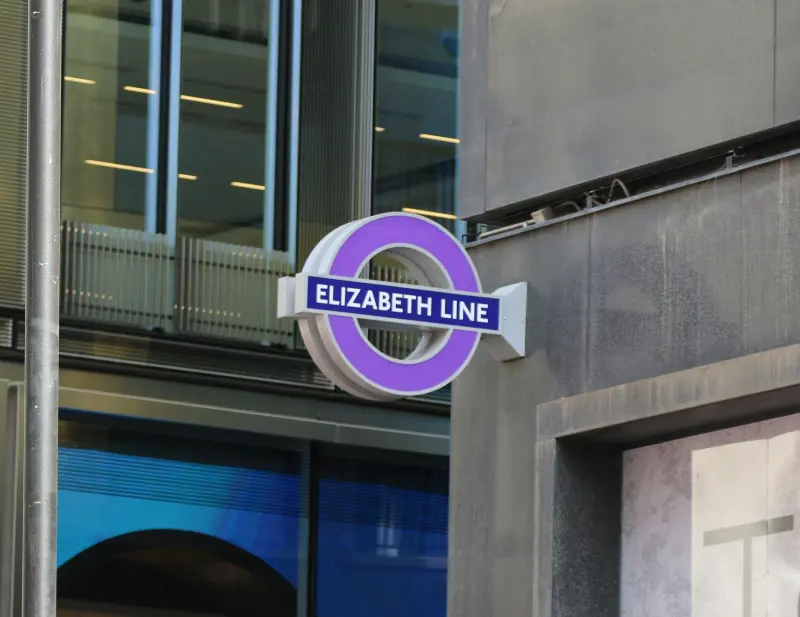
Transport for London has deployed digital passenger assistance technology across the Elizabeth line, giving frontline staff at all 41 stations a shared platform to coordinate support for passengers who need assistance in real time — including those who arrive at a station without having booked help in advance.
The technology, developed by Transreport, has been used across Great Britain’s national rail network and in Japan, but the Elizabeth line deployment marks the company’s first entry into a high-frequency urban metro environment — a setting that presents fundamentally different operational challenges from longer-distance rail journeys.
Why Urban Rail Presents Different Challenges
Passenger assistance on longer-distance national rail services typically operates on a pre-booking model. Passengers who need assistance — including wheelchair users, visually impaired travellers, and those with other mobility or sensory needs — book support in advance, allowing staff at origin and destination stations to prepare and coordinate before the passenger arrives.
The Elizabeth line’s operating model is different in ways that matter for how assistance is delivered.
The line carries approximately 800,000 customer journeys every weekday across 41 stations, with trains running frequently throughout the day. Many passengers make spontaneous journey decisions — joining the line without advance planning and without having pre-arranged assistance. For passengers who need support, this means the assistance system must be capable of responding at the point of arrival rather than relying primarily on pre-booked requests.
When a passenger arrives at an Elizabeth line station and requests assistance, staff need to understand what support is required and — where the journey involves a change or a station where additional coordination is needed — share that information with colleagues elsewhere on the network in time to be useful.
In a high-frequency metro environment where trains may be only minutes apart, this coordination must happen quickly. A system that works through phone calls, paper records, or disconnected digital tools creates delays and inconsistencies that a shared real-time digital platform can reduce.
What Transreport’s Technology Does
Transreport’s Passenger Assistance platform gives station staff a shared digital environment for recording and managing assistance requests in real time. When a passenger arrives and requests help, staff can record the nature of the support needed, share that information with colleagues at relevant stations along the journey, and coordinate handovers between teams as the passenger moves through the network.
The platform is designed to make the coordination of spontaneous assistance requests — which are more common in urban metro environments than in longer-distance rail — faster and more consistent. Rather than each station managing its own records in isolation, the shared platform gives all relevant staff visibility of what assistance is in progress, what has been requested, and what coordination is needed.
The practical effect for passengers is that support should be more reliably available even when they have not pre-arranged it, and the information about what they need should be available to staff at each relevant point in their journey without them having to explain their requirements repeatedly.
The Data Dimension
Beyond improving coordination of individual assistance requests, the deployment will generate operational data about how assistance is being used across the Elizabeth line — data that does not currently exist in a consistent, structured digital form.
Each recorded interaction contributes to an aggregate picture of when, where, and how often passengers request support, what types of assistance are most commonly needed, and where coordination challenges arise most frequently.
Over time, this data can inform:
Staffing decisions — identifying stations and time periods where assistance demand is highest
Training priorities — understanding which types of assistance are most common and ensuring staff capability matches demand
Service planning — informing decisions about how assistance processes should be structured as the network evolves
Accessibility investment — providing evidence for capital investment decisions around station infrastructure and equipment
This data-driven approach to accessibility planning represents a shift from reactive service management — responding to problems when they arise — toward proactive planning based on systematic operational evidence.
The Elizabeth Line’s Accessibility Infrastructure
The Elizabeth line was built to a modern accessibility standard from the outset. All 41 stations are step-free from street to platform — a characteristic that sets it apart from much of the legacy Underground network, where step-free access remains incomplete across many stations.
The step-free infrastructure addresses the physical dimension of accessible travel — getting onto and off trains without encountering steps or level differences that create barriers for wheelchair users, parents with buggies, and others with mobility needs. However, physical infrastructure alone does not deliver consistently accessible travel. The human and informational dimensions — knowing that assistance will be available, that staff are coordinated, and that support will follow you through your journey — are equally important for passengers who need active help rather than simply accessible infrastructure.
Transreport’s deployment is designed to strengthen these human and informational dimensions of accessibility on a line that already has strong physical infrastructure, creating a more complete accessible travel experience than step-free access alone can deliver.
Transreport’s Track Record
Transreport’s Passenger Assistance technology has supported more than 12 million assistance requests across rail networks in Great Britain and Japan before the Elizabeth line deployment. The company’s established presence across national rail provides a foundation of experience with assisted travel at scale, though as noted above, the metro environment presents operational differences that required adaptation of the platform for urban use cases.
Jay Shen, Founder and CEO of Transreport, said the Elizabeth line deployment represents an important evolution of Passenger Assistance — from supporting assisted travel across national and regional networks to operating within the high-frequency, high-volume environment of metro and urban transport. He described the ability to travel spontaneously and still receive needed assistance as fundamental to accessible urban transport.
Why This Matters for London’s Disabled Passengers
London’s disabled population — estimated at approximately 1.5 million people across Greater London — represents a significant share of potential Elizabeth line users. For many disabled people, the availability and reliability of assistance is a determining factor in whether they use public transport at all.
Research consistently shows that uncertainty about whether assistance will be available, or anxiety about what happens if it breaks down mid-journey, leads many disabled passengers to avoid public transport journeys they might otherwise make — reducing their independence and limiting their access to employment, healthcare, and social participation.
Technology that makes assistance more reliable and more consistently available — particularly for spontaneous journeys that cannot be pre-planned — directly addresses this deterrent effect, extending the practical reach of accessible transport infrastructure to more of the people it was designed to serve.

