

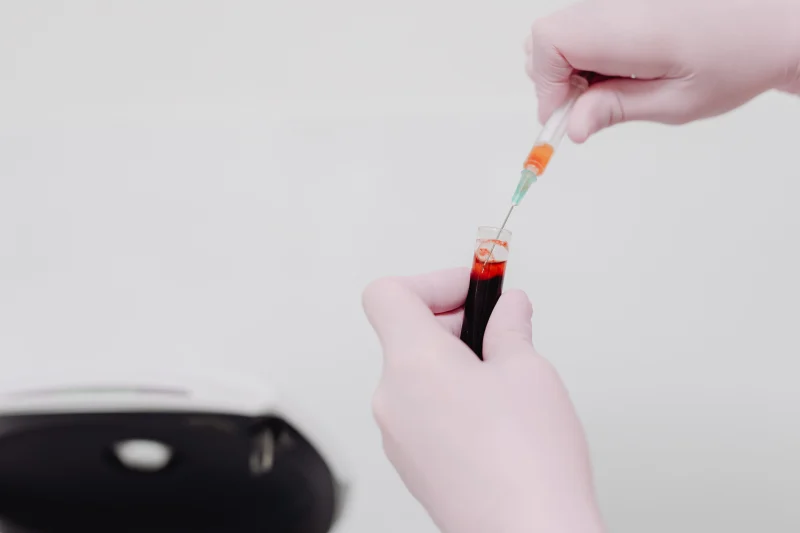
Imperial College Healthcare NHS Trust begins recruiting participants for READ-OUT study, part of a multi-million-pound Blood Biomarker Challenge targeting 3,100 people across 37 UK sites
Imperial College Healthcare NHS Trust in north west London has joined a national clinical trial testing whether blood tests can provide a faster and more accurate way to diagnose dementia, opening recruitment to participants across the area as part of a UK-wide study already running at dozens of sites.
The trial — known as READ-OUT (REAl World Dementia OUTcomes) — is led by the research team at Dementias Platform UK and forms part of the Blood Biomarker Challenge, a multi-million-pound initiative backed by Alzheimer’s Society, Alzheimer’s Research UK, the National Institute for Health and Care Research, Gates Ventures, and funding raised through Postcode Lottery players.
What the Trial Is Testing
The READ-OUT study is assessing whether a panel of blood tests can work alongside existing diagnostic methods in NHS memory clinics to help clinicians diagnose dementia more quickly and accurately.
Current dementia diagnosis typically involves a combination of cognitive assessments, brain imaging, and clinical evaluation — a process that can take months and involves multiple appointments. Blood biomarker tests, if validated for clinical use, could simplify and accelerate this pathway by identifying biological markers of disease in a single blood sample.
The trial is examining blood tests across four types of dementia:
- Alzheimer’s disease — the most common form, accounting for approximately 60-70 percent of dementia cases
- Vascular dementia — caused by reduced blood flow to the brain, the second most common type
- Frontotemporal dementia — affecting the frontal and temporal lobes, more common in younger-onset cases
- Dementia with Lewy bodies — characterised by protein deposits that affect brain chemistry and function
Researchers will also assess whether the blood tests can detect these conditions at different stages of disease progression, and whether results need to be interpreted differently for people from different ethnic backgrounds or with other health conditions such as kidney disease.
Why This Research Is Urgent
The timing of the trial is directly linked to a significant development in dementia treatment. New drugs have been developed that can slow the progression of early-stage Alzheimer’s disease — though these treatments are not yet approved for NHS use.
Professor Vanessa Raymont, Director of Dementias Platform UK and co-lead of the READ-OUT study, described the current period as an incredibly exciting time for dementia research. She said it would be nothing short of disastrous if people were unable to receive a diagnosis early enough to benefit from new treatments once they do become available on the NHS.
The implication is clear: the diagnostic pathway must be able to identify Alzheimer’s disease at an early stage before symptom-modifying drugs become clinically useful for patients. Blood biomarker tests that work reliably in real-world NHS settings could provide that earlier diagnostic window — but only once the evidence base from real-world trials demonstrates they perform as well in diverse NHS populations as they do in controlled research environments.
The Inclusion Dimension
A specific feature of the READ-OUT study is its commitment to recruiting participants from communities that are frequently underrepresented in clinical research.
Imperial College Healthcare NHS Trust’s north west London location is significant in this context. The trust serves some of London’s most diverse communities, spanning areas with high proportions of residents from South Asian, Black African and Caribbean, Middle Eastern, and other ethnic minority backgrounds.
Professor Raymont said the north west London site is actively recruiting from a broad range of people including those from minority ethnic groups, older adults, and people with other medical conditions — groups whose inclusion is essential to understanding how blood biomarker tests perform across the UK’s actual patient population rather than a narrower demographic slice.
This matters clinically as well as ethically. If blood biomarker tests are validated primarily in white European populations and then deployed across the NHS without evidence of their performance in other groups, they may produce different rates of accuracy in populations not well represented in the original evidence base. The READ-OUT study is specifically designed to generate the data needed to avoid this outcome.
Scale and Structure of the National Trial
The READ-OUT study began recruiting its first participants in Oxford in January 2025 and is now expanding across a network of 37 Dementias Platform UK sites across the UK. The total recruitment target is 3,100 participants, drawn from NHS memory clinics and community-based settings including mobile research buses designed to reach people who may not attend hospital-based clinics.
The combination of clinical and community recruitment settings reflects the study’s aim of capturing a genuinely representative sample of people seeking dementia diagnosis in real-world conditions — not only those who are already engaged with specialist NHS services.
Dementia in London: The Scale of Need
London has a substantial and growing population of people living with dementia. Across Greater London, estimates suggest more than 70,000 people are currently living with a dementia diagnosis, with the actual number likely higher given well-documented under-diagnosis rates.
Dementia diagnosis rates in the UK have been a persistent policy concern for over a decade. Despite a national diagnosis rate target of two-thirds of estimated prevalent cases, the UK continues to fall short — particularly for early-stage disease, for people from ethnic minority communities, and for younger-onset dementia. Each of these gaps is directly relevant to the READ-OUT study’s design and ambitions.
For London specifically, the city’s age profile, ethnic diversity, and concentration of people with relevant health conditions such as cardiovascular disease — a major risk factor for vascular dementia — make it both a high-need environment for dementia diagnosis improvement and a critical location for generating evidence about how blood biomarker tests perform across varied populations.
What Happens After the Trial
If the READ-OUT study demonstrates that blood biomarker tests work reliably across diverse NHS populations, the next step would be building the evidence base for their integration into routine NHS clinical practice — potentially transforming the diagnostic pathway for the hundreds of thousands of people referred to memory clinics each year.
The study results will be used to inform NHS England, NICE, and other regulatory and commissioning bodies about whether and how blood tests should be incorporated into standard dementia diagnostic pathways. This process typically takes several years from trial completion to clinical implementation, but the READ-OUT data would represent a critical step in that journey.
How to Get Involved
People in north west London who are currently attending an NHS memory clinic and may be eligible to participate in the READ-OUT study can speak to their memory clinic team about the trial. The study is recruiting people who are undergoing or have recently completed a dementia diagnostic assessment through their memory clinic.
More information about the READ-OUT study and the Blood Biomarker Challenge is available through the Dementias Platform UK website and through Alzheimer’s Research UK at alzheimersresearchuk.org.

