

The NHS in London has ended the 2025/26 financial year in its strongest position since before the pandemic, with significant improvements recorded across elective waiting times, emergency care, ambulance response and cancer treatment — all confirmed in the capital’s annual performance data published this week by NHS England London.
For Londoners who have waited longer than they should for treatment, the figures represent tangible progress. For NHS staff across the capital, they reflect a year of sustained, often difficult work under continued pressure from rising demand.
Elective Waiting Times: The Biggest Improvement in Four Years
The headline figure from this year’s data is the improvement in elective waiting times — the time from referral to treatment for planned care such as operations, outpatient appointments and diagnostic procedures.
66.9% of Londoners are now waiting less than 18 weeks for elective treatment, up from 60.8% at the start of the year — a level not seen since June 2022. That six-percentage-point improvement in a single year is the fastest annual progress London has made on this measure in recent memory.
To understand what that means in practice: the 18-week standard is the NHS’s core commitment for planned care — a patient referred by their GP for treatment should not wait more than 18 weeks to receive it. The 18-week treatment target has not been met nationally since 2016, and London’s 66.9% performance — while still below the 92% national standard — represents a meaningful move in the right direction. Nationally, almost 63% of patients were seen within 18 weeks in February 2026, against an interim target of 65% by March 2026. London’s year-end figure of 66.9% places the capital ahead of the national picture.
Whittington Health NHS Trust delivered one of the most striking individual performances. The north London trust took more than 5,500 patients off its waiting list in February and March 2026 alone through a series of intensive clinical ‘sprints’ — additional clinics held during evenings and weekends to deliver extra outpatient appointments and neurodevelopmental assessments for children and young people. The number of patients waiting more than 52 weeks plummeted from over 650 in December to just 76 by year end, and the trust finished the year with 71.4% of patients seen within 18 weeks — exceeding the national interim target.
Homerton Healthcare NHS Foundation Trust improved its 18-week performance from 62.7% to 76.6% across the year — a 14-percentage-point gain — through a data-led, clinically informed approach focused on reviewing pathways, strengthening referral processes and detailed modelling of where changes would have the greatest impact.
Emergency Care: Best A&E Performance Since 2021
London’s A&E four-hour performance reached 79.8% in March — its highest since August 2021 — after the capital recorded 4.9 million A&E attendances.
The four-hour standard — which measures the proportion of patients seen, treated and either admitted or discharged within four hours of arriving at A&E — has been one of the most politically contentious NHS performance measures for years. The proportion of patients spending more than four hours in hospital A&E reached a record high of 50.4% in December 2022. London’s March 2026 figure of 79.8% — meaning that nearly four in five patients were seen within four hours — represents a sustained recovery from that low point.
The improvement is partly structural. The investments announced earlier this year in urgent treatment centres and same-day emergency care units at hospitals including West Middlesex, Charing Cross and North Middlesex are designed to divert patients with urgent but stable conditions away from main A&E departments, reducing pressure on the most acute parts of the emergency care pathway. You can read more about those specific investments in our detailed coverage of the major NHS infrastructure upgrades confirmed for London in 2026.
Ambulance Response Times: Fastest Since 2021
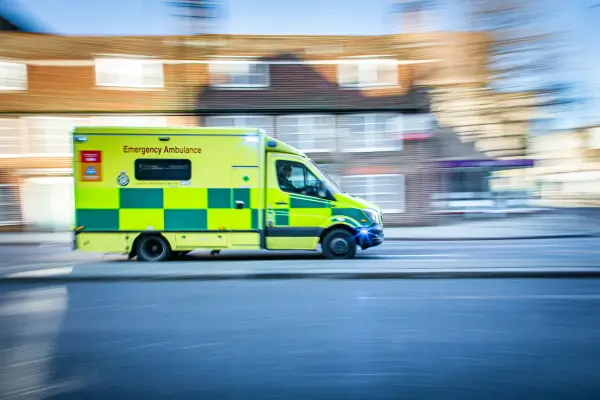
Category 2 ambulance response times hit their fastest since May 2021, with the average response reaching 25 minutes and 51 seconds in March.
Category 2 calls cover serious emergency conditions including suspected heart attacks and strokes — cases where the speed of ambulance response directly affects clinical outcomes. The NHS target for Category 2 response is 18 minutes on average. Nationally, the ambulance response time for Category 2 calls fell below the 30-minute mark for the second consecutive month in March 2026, with a national average of 26 minutes and 18 seconds. London’s 25 minutes and 51 seconds places it marginally ahead of the national figure.
Cancer Diagnosis and Treatment: Faster From Referral to Care
Improving cancer outcomes requires speed at every stage: referral, diagnosis and treatment. The 2025/26 data shows progress across all three.
Over nine in ten patients — 95.2% — received their first cancer treatment within 31 days of a decision to treat, up from 94.6% at the start of the year. Over seven in ten patients — 78.0% — began treatment within 62 days of an urgent referral, broadly in line with the position at the start of the year.
The 62-day standard has been one of the most challenging cancer targets for NHS trusts across England. Nationally in November 2025, 70.2% of patients were treated within 62 days of referral under the new standard — London’s 78.0% performance is therefore notably above the national figure.
The improvement in faster diagnosis has been supported by shorter waits for diagnostic tests, more direct referral routes from GPs to specialists, and better coordination between primary and secondary care. The expansion of Community Diagnostic Centres — including the upgrades at Wembley and Eltham CDC confirmed earlier this year — is directly contributing to shorter diagnostic waits by increasing the volume of MRI scans, ultrasounds and other tests that can be carried out in community settings.
NHS England London acknowledges that cancer waiting times vary by cancer type, and that further work is needed to ensure all patients — regardless of which cancer they have — are treated as quickly as possible.
Primary Care: 56 Million GP Appointments Delivered
Beyond hospitals, London’s primary care system also recorded strong performance across 2025/26. GPs delivered over 56 million appointments over the year, with 55% of patients seen either on the same or the next day. Neighbourhood healthcare — delivered through Community Diagnostic Hubs, Surgical Hubs and Neighbourhood Health Centres — helped reach Londoners closer to home, reducing the need for hospital visits for conditions that can be managed in community settings.
Technology Playing a Growing Role
Behind the headline performance figures, technology is increasingly part of how London’s NHS is delivering improvements. The deployment of AI scribing tools — which automatically generate clinical notes during patient consultations, reducing the administrative burden on doctors and nurses — is expanding rapidly across the capital. Four south west London trusts are in the process of deploying AI scribing technology to 20,000 clinicians in one of the largest ambient voice technology programmes in NHS history. By saving clinicians time on documentation, these tools directly free up time for patient care — contributing to the kind of throughput improvements that underpin the year’s performance gains.
The Honest Assessment: Progress With Caveats
NHS England London has been clear that while this year’s data is genuinely encouraging, the work is not done. Demand on NHS services continues to grow — London’s population is rising, the city is ageing, and the complexity of conditions presenting to both primary and secondary care is increasing year on year.
The improvements recorded in 2025/26 were achieved against this rising demand, which makes them more meaningful. But they also mean that standing still is not an option. The target of 92% of patients seen within 18 weeks — the NHS’s pre-pandemic standard — remains some way off. Cancer waiting times, while improved, still leave a significant proportion of patients waiting longer than they should.
The NHS in London has had a good year. The task now is to build on it.
Key NHS London Performance Figures: 2025/26
| Metric | Performance | Comparison |
|---|---|---|
| 18-week elective wait | 66.9% seen within 18 weeks | Up from 60.8% — best since June 2022 |
| A&E four-hour performance | 79.8% in March | Best since August 2021 |
| A&E attendances | 4.9 million | Full year total |
| Category 2 ambulance | 25 min 51 sec average | Fastest since May 2021 |
| Cancer: 31-day treatment | 95.2% within 31 days | Up from 94.6% |
| Cancer: 62-day treatment | 78.0% within 62 days | In line with start of year |
| GP appointments | 56 million | 55% same or next day |
All performance data in this article is sourced from NHS England London’s annual performance publication for 2025/26, published May 2026, and supplemented by Nuffield Trust NHS Performance Dashboard and House of Commons Library NHS Key Statistics briefing, May 2026.

