

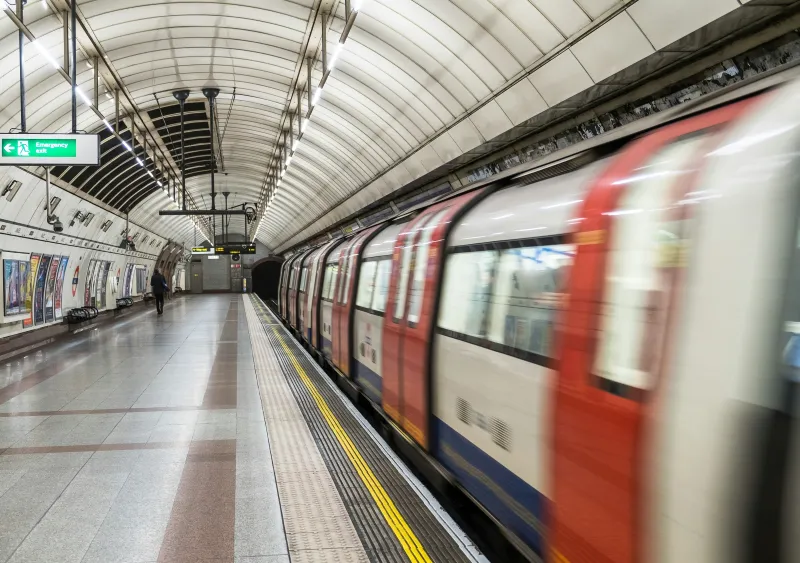
London Underground services are facing disruption on Thursday 26 November and Friday 27 November after RMT members began the first of eight planned strikes. The union says proposed changes threaten drivers’ working conditions, while TfL insists it has addressed most of the concerns.
London Underground passengers are facing disruption as the first of eight planned strikes by RMT train drivers gets under way.
The 24-hour walkout began at midday on Thursday 26 November and is due to continue until 11.59pm on Friday 27 November. Although most Tube lines are expected to run for part of the strike period, services are being reduced and some routes face full closures.
The dispute centres on Transport for London’s proposed changes to drivers’ working arrangements, including an option to move to a voluntary four-day working week.
Talks between London Underground management and the RMT at the Acas conciliation service failed to produce an agreement on Tuesday 24 November. The union has decided to continue with its planned action.
For passengers, the immediate concern is disruption across the network, particularly for journeys into central London and connections to major stations and airports.
Which Tube lines are affected?
TfL has warned that disruption will begin before the official midday start of the strike.
On Thursday, the Circle and Piccadilly lines are expected to have no service throughout the day. Other lines are expected to run normally until around 10am, when services will begin to reduce.
From midday, disruption is expected across the Underground. The Waterloo & City line will also have no service from that time. TfL expects no Tube services to operate after 9pm.
Friday will bring a gradual return rather than an immediate restart.
Services are expected to begin operating again from around 7am, but there will be no service on the Circle, Piccadilly and Waterloo & City lines until midday. Other lines are expected to experience disruption during the morning.
TfL expects services to continue improving through Friday afternoon, with a normal service anticipated across the network at around 6pm.
The Elizabeth line, DLR, London Overground, buses and trams are expected to operate as normal on Thursday and Friday. However, passengers should allow extra time because these services are likely to be busier as people look for alternatives to the Tube.
Travellers should check the latest information before leaving home. TfL’s official strike information page and TfL Go app provide service updates.
Why are Tube drivers striking?
The disagreement is about more than the idea of a four-day working week.
TfL has proposed giving drivers the option of working a shorter four-day pattern, with rosters based on a 34-hour week. According to Aslef, which represents Tube drivers alongside the RMT, the arrangement could give participating drivers an additional 35 days off each year.
The proposal also involves changes to how drivers book on for duty, including a move from paper-based processes to electronic systems.
TfL says the shorter working pattern is voluntary. It has also added an option allowing drivers who want to remain on a five-day week to do so while keeping their existing depot.
That change has not resolved the disagreement with the RMT.
The union says the wider Trains Modernisation Framework would alter existing agreements and weaken protections, whether drivers choose the four-day or five-day option.
In its explanation of the dispute, the RMT has raised concerns about longer duties, more time spent driving trains, changes to shift patterns and the possibility of drivers being moved away from their current depots. It has also warned about potential job reductions.
These are the union’s objections to the proposed arrangements. TfL’s position is that it has addressed most of the concerns raised and wants the offer put to a vote among drivers.
The disagreement over what the changes would mean in practice is at the heart of the dispute.
Why Aslef disagrees with the RMT
The RMT is not the only union representing London Underground drivers. Aslef has taken a different position on the proposed four-day arrangement.
Finn Brennan, Aslef’s full-time organiser on London Underground, said the union was surprised that the RMT had chosen strike action to oppose a voluntary shorter working week.
Aslef says the option gives drivers more time away from work and that management has agreed drivers who remain on a five-day pattern will not suffer a disadvantage.
The difference between the unions is significant. While the RMT argues that the wider framework could undermine existing conditions, Aslef believes the voluntary arrangement offers drivers a worthwhile choice.
For TfL, the disagreement makes it harder to reach a settlement that satisfies both unions and avoids further disruption.
Eight strike dates run through February
The November walkout is the first of eight 24-hour strikes announced by the RMT. Further action is planned across December, January and February.
The announced dates are:
| Strike date | Day |
|---|---|
| 26 November 2026 | Thursday |
| 17 December 2026 | Thursday |
| 19 December 2026 | Saturday |
| 4 January 2027 | Monday |
| 6 January 2027 | Wednesday |
| 17 February 2027 | Wednesday |
| 23 February 2027 | Tuesday |
| 25 February 2027 | Thursday |
Each strike is scheduled to begin at midday and run until 11.59pm the following day. The practical disruption can start earlier as services are reduced and continue after the walkout while trains and staff return to normal schedules.
The two December dates are particularly important for London’s retail, hospitality and entertainment businesses because they fall during the Christmas trading period.
However, the impact of each future strike will depend on whether the dispute continues and what services TfL can operate. Passengers should check the latest advice before making plans for those dates.
What could the strikes mean for London’s businesses?
The immediate effects are likely to be felt by commuters, visitors and businesses that rely on people travelling around the capital.
Restaurants, pubs, shops, theatres and other venues may face changes in customer numbers when journeys become more difficult. Workers may also need to leave earlier, work from home or find alternative routes.
The effect will not be the same for every business. Some customers may avoid travelling altogether, while others may switch to buses, the Elizabeth line, the DLR or rail services.
It is too early to put a reliable financial figure on the cost of this particular series of strikes. Estimates from previous industrial action should not be presented as a forecast for the November 2026 dispute.
For businesses preparing for the December dates, the uncertainty itself is a problem. Employers and venues may need to consider staff travel arrangements, customer communications and changes to bookings if further action goes ahead.
Can TfL and the RMT still reach an agreement?
TfL says it believes most of the RMT’s concerns have been addressed and has urged the union to put the current proposal to its members.
The RMT says the outstanding issues are serious enough that it cannot accept the offer in its current form. Its position is that drivers need stronger guarantees on existing agreements, working conditions and depot arrangements.
Aslef’s support for the voluntary four-day option adds another dimension to the negotiations, but it has not brought the RMT dispute to an end.
For now, there is no confirmed settlement that would cancel the remaining strike dates.
Londoners should therefore prepare for the possibility of further disruption over the winter, while keeping an eye on announcements from TfL and the unions. Any change to the planned action could affect travel arrangements across the capital.

