

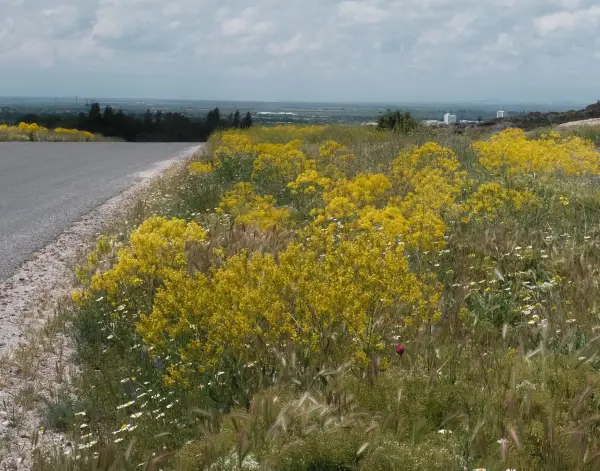
TfL expands wildflower coverage to 520,000m² across the capital, with butterfly sightings rising more than 50 percent year-on-year
Transport for London has doubled the amount of wildflower verges across its road network in just two years, growing coverage from 260,000 square metres in 2024 to 520,000 square metres today. The expansion supports a wider push to make London greener and more resilient to climate change, marked during this year’s Climate Action Week.
Where New Wildflower Verges Have Appeared
Several new sites have been introduced over the past year, including:
- A10 in Enfield — 5,000m²
- A2 in Bexley — 2,000m²
- A217 in Sutton — 1,700m²
TfL has also sown wildflower seeds, donated by Butterfly Conservation, on traffic islands near Rotherhithe roundabout that previously held more formally planted, low-biodiversity vegetation.
These additions complement established wildflower sites already accessible to the public, including a verge at Redbridge Roundabout reachable via a pedestrian underpass, and another running alongside a shared foot and cycle path on the A40 in Hillingdon.
How the Approach Works
TfL’s wildflower programme began as a small trial in 2019 at two locations — alongside the A40 in Hillingdon and the A406 at Redbridge. The method is simple: rather than mowing verges up to eight times a year, TfL now mows just twice annually and removes the cuttings afterward.
This reduced-mowing approach allows wildflowers to establish, flower, and seed naturally, creating richer habitats than closely-cut grass verges can support. The technique also reduces carbon emissions associated with frequent mowing, while wildflower meadows themselves help draw carbon dioxide from the atmosphere into the soil.
Measurable Wildlife Recovery
Since 2023, TfL has partnered with the conservation charity Butterfly Conservation to monitor butterfly and moth populations across its wildflower sites. The data shows a clear upward trend:
- 2025 survey results: 118 surveys conducted across 34 sites
- Butterflies recorded: approximately 720, spanning 22 species
- Day-flying moths recorded: approximately 100
- Year-on-year change: average butterfly sightings increased by more than 50 percent compared to 2024
This data provides measurable evidence that reduced mowing and wildflower planting are directly supporting pollinator populations across London’s road network — habitats that also provide nectar, food, and shelter for bees, birds, and small mammals.
Part of a Wider Green London Strategy
The wildflower programme sits within a broader set of environmental initiatives across the capital. According to City Hall, London has also seen more than 640,000 trees planted, including two major new woodlands, alongside the creation or restoration of green space equivalent to more than 2,000 football pitches.
Deputy Mayor for Environment and Energy Mete Coban MBE said the expansion of wildflower verges demonstrates how relatively simple changes can have a significant impact on nature’s recovery. He linked the initiative to the Mayor’s wider commitment to greener neighbourhoods, framing it as part of practical, climate-focused investment across the city.
Lilli Matson, TfL’s Chief Safety, Health and Environment Officer, said the organisation has doubled wildflower verges in two years and is already seeing wildlife return, describing the rise in butterfly numbers as genuinely encouraging. She added that improving biodiversity and reducing carbon emissions through verge management benefits not just wildlife, but everyone living in and travelling through the capital, by building a more resilient and pleasant city.
Why Roadside Verges Matter for Urban Biodiversity
Roadside verges are often overlooked as habitat, yet collectively they represent a substantial area of land across any major city’s transport network. In London, where green space is unevenly distributed and often under pressure from development, verges along arterial roads provide connected wildlife corridors that link parks, gardens, and nature reserves — supporting species movement across otherwise fragmented urban landscapes.
Pollinator decline has been a recognised concern across the UK for over a decade, driven by habitat loss, pesticide use, and changes in land management. Initiatives like this offer a low-cost, scalable model that other UK cities and local authorities could adopt on their own road networks.
For more on how TfL is investing in its road infrastructure, see TfL launches new radar speed cameras across London.

