

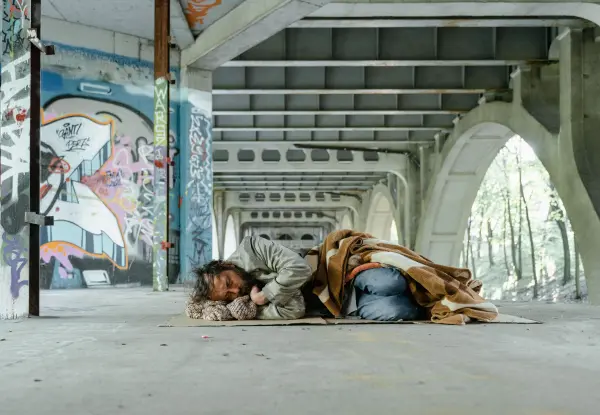
17,000 young people presented as homeless to London councils last year while street count showed just 1,291 — charity warns data tells only part of the story
The number of young people sleeping rough in London has fallen over the past year, but leading homelessness charity Centrepoint says the drop conceals a significantly larger youth homelessness crisis playing out largely out of public sight.
What the Official Figures Show
Data from the Combined Homelessness and Information Network (CHAIN) — a multi-agency database funded by the Greater London Authority — recorded 1,291 young people aged 25 and under sleeping rough in London between April 2025 and April 2026. This represents an 8.5 percent decrease from the previous year.
Among care leavers — one of the most vulnerable groups within the rough sleeping population — numbers also fell, from 721 in 2024/25 to 667 in 2025/26.
Across all age groups, 12,938 people were recorded sleeping rough on London’s streets during the past year, a 2 percent reduction from 13,231 the previous year.
Why the Numbers Tell an Incomplete Story
While any reduction in rough sleeping is significant — sleeping on the streets is widely recognised as one of the most dangerous forms of homelessness — Centrepoint’s own research reveals the gap between what street counts capture and the true scale of youth homelessness in the capital.
Research from Centrepoint’s Youth Homelessness Databank found that 17,000 young people presented as homeless or at risk of homelessness to their local authority in 2024/25.
That single figure — 17,000 — compared to the 1,291 young people recorded sleeping rough illustrates the scale of what remains hidden. The majority of young people experiencing homelessness are not sleeping on streets. They are in temporary accommodation, sofa-surfing between friends and family, staying in unsafe environments, or in housing that fails to meet basic standards of stability or safety.
The Groups Most at Risk
Care leavers — young people transitioning out of the local authority care system — remain disproportionately represented among rough sleepers despite the year-on-year reduction. Young people leaving care often face a sudden loss of housing support at 18, a transition point that research consistently identifies as a primary trigger for youth homelessness.
Other groups at elevated risk of hidden youth homelessness in London include:
- Young people fleeing domestic abuse or family breakdown
- Those with mental health difficulties who have been discharged from services without stable housing
- LGBTQIA+ young people who have experienced family rejection
- Young people with no recourse to public funds due to immigration status
What Centrepoint Says Needs to Change
Lisa Doyle, Head of Policy and Public Affairs at Centrepoint, said the decrease in rough sleeping is undeniably positive but that rough sleeping represents only part of the picture. She said that for every young rough sleeper in London, many more young people have no safe place to stay and have equally been failed by the system.
She said the reductions demonstrate what becomes possible when funding and political commitment are aligned, but argued that programmes targeting rough sleepers can only achieve so much without structural change. Centrepoint is calling on central government to commit to a significant programme of building one-bedroom social homes, arguing that without this, too many young people will continue to be denied the opportunity to escape homelessness entirely.
The Housing Context Behind the Numbers
London’s youth homelessness crisis sits within one of the most acute housing markets in the world. Private rental costs across the capital continue to outpace incomes for young workers, while social housing waiting lists in many boroughs stretch to years rather than months.
One-bedroom social homes — the specific housing type Centrepoint identifies as essential — are in particularly short supply. Young single adults typically fall outside the priority criteria for larger family social housing, leaving them dependent on a private rental market that is increasingly inaccessible without significant financial support.
The GLA’s CHAIN data provides the most comprehensive street count methodology available in the UK, but by design it captures only those physically found sleeping rough during monitoring periods — not those in temporary or unstable accommodation that falls outside formal rough sleeping definitions.
This data gap between official counts and the lived reality of youth homelessness is not unique to London, but the capital’s housing pressures make the divergence particularly pronounced.
For more on challenges facing London’s most vulnerable residents, see earlier reporting on London road deaths falling to near-record lows despite rising serious injuries.

