

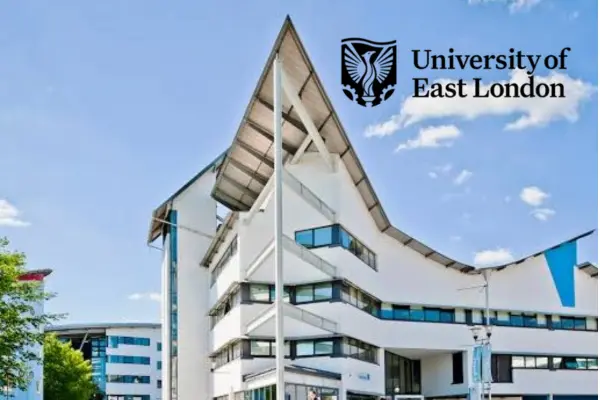
UEL’s Royal Docks School of Business and Law publishes impact report showing how its startup support programme is driving east London’s entrepreneurial growth
A new impact report from the University of East London reveals the measurable results of its business startup support programme over the past year, documenting how academic resources are being converted into real businesses, jobs, and investment across east London.
The Numbers Behind the Programme
The Royal Docks School of Business and Law’s Startup Gateway Services delivered the following outcomes in a single year:
- 95+ aspiring entrepreneurs supported
- 11 new businesses created
- 27 existing small and medium enterprises supported through growth phases
- £540,000+ in grant funding secured by participants
- 50+ hours of mentoring and expert support delivered
- 10 businesses established at TerraDock, the Royal Docks Centre for Sustainability’s innovation hub
These figures come from a programme that combines several distinct services under one operational framework, covering founders from initial concept stage through to active business growth.
What the Startup Gateway Actually Provides
The Startup Gateway brings together four core components:
Business Incubator Programme
Provides structured support for early-stage founders, offering workspace, mentoring, and access to a network of experienced entrepreneurs and industry specialists.
Help to Grow Management Course
A government-backed programme delivered through the university, designed to support established small business leaders with practical management training, peer learning, and one-to-one business mentoring.
Entrepreneur in Residence Scheme
Connects founders with experienced business leaders who provide hands-on guidance based on direct entrepreneurial experience rather than purely academic knowledge.
Enterprise Support Activities
A wider programme of events, workshops, networking opportunities, and expert sessions available to the broader founder community associated with the university.
Together these components create what the school describes as a pipeline of support — meeting founders at whichever stage they enter and accompanying them through subsequent phases of development.
Businesses Emerging From the Programme
The impact report features companies across a range of sectors, including creative agencies, health and wellbeing, logistics, sustainable enterprise, and technology. Three examples highlighted in the report illustrate the variety:
Happy Yolk — A social-first creative agency supporting design-led brands through digital marketing strategy and content production.
Prospering Minds Consultancy — Expanding behaviour and sleep support services for both neurodivergent and neurotypical individuals, addressing a growing gap in accessible specialist provision.
Mile Rainbow CIC — Founded by NHS preventive medicine specialist Hong Zhou, the community interest company has supported thousands of people in building emotional resilience through evidence-based approaches.
The breadth of sectors represented reflects the programme’s sector-agnostic approach — support is structured around the stage of business development rather than the industry a founder is entering.
TerraDock: The Innovation Hub in the Royal Docks
Ten businesses from the programme have established themselves at TerraDock, the Royal Docks Centre for Sustainability’s innovation hub. Located within one of London’s most significant regeneration zones, TerraDock provides physical workspace alongside access to the sustainability-focused research and industry networks that have developed around the Royal Docks area.
The Royal Docks has been a designated Enterprise Zone since 2012 and continues to attract significant investment in technology, sustainability, and creative industries — providing a commercial environment that complements the university’s startup support work with real market opportunity on its doorstep.
Why East London Specifically Needs This
East London’s entrepreneurial landscape is distinctive. The area combines some of London’s highest concentrations of youth unemployment and economic deprivation with a growing technology and creative economy, significant immigrant and first-generation entrepreneurship, and proximity to the City of London’s financial infrastructure.
For many founders in this part of the capital, access to early-stage business support, mentoring, and grant funding represents a meaningful difference between an idea remaining unexplored and becoming a viable company. University-based programmes that are free or subsidised at point of access remove financial barriers that would otherwise exclude founders from lower-income backgrounds.
The £540,000 in grant funding secured by participants represents external capital flowing into east London businesses — money that would not have entered the local economy without the guidance the programme provides in identifying and applying for appropriate funding streams.
What Programme Leaders Are Saying
Dr Yuliana Topazly, Associate Professor of Enterprise and Innovation and Director of the Help to Grow Management Course and Business Incubator Programme, said the report demonstrates that the university is not only studying businesses but actively helping create them. She said the programme meets founders wherever they are on their journey, whether arriving with just an initial idea or seeking support to scale an established operation.
Professor Fatima Annan-Diab, Vice-Provost for Business and Executive Dean of the Royal Docks School of Business and Law, described the focus as practical, applied learning leading to real impact for organisations and communities — framing the startup ecosystem as one that extends well beyond the university campus itself.
The Broader Picture for London’s University-Led Startup Ecosystem
UEL is one of several London universities developing structured entrepreneurship support programmes, but its specific focus on east London’s communities and the Royal Docks regeneration zone gives it a distinctive geographic and economic rationale. As London’s innovation economy continues spreading eastward — driven by infrastructure investment, lower commercial rents relative to central London, and deliberate policy decisions around tech cluster development — university-anchored startup programmes in this part of the capital are increasingly well-positioned to connect founders with genuine commercial opportunity.

